BWAW promo graphic v11

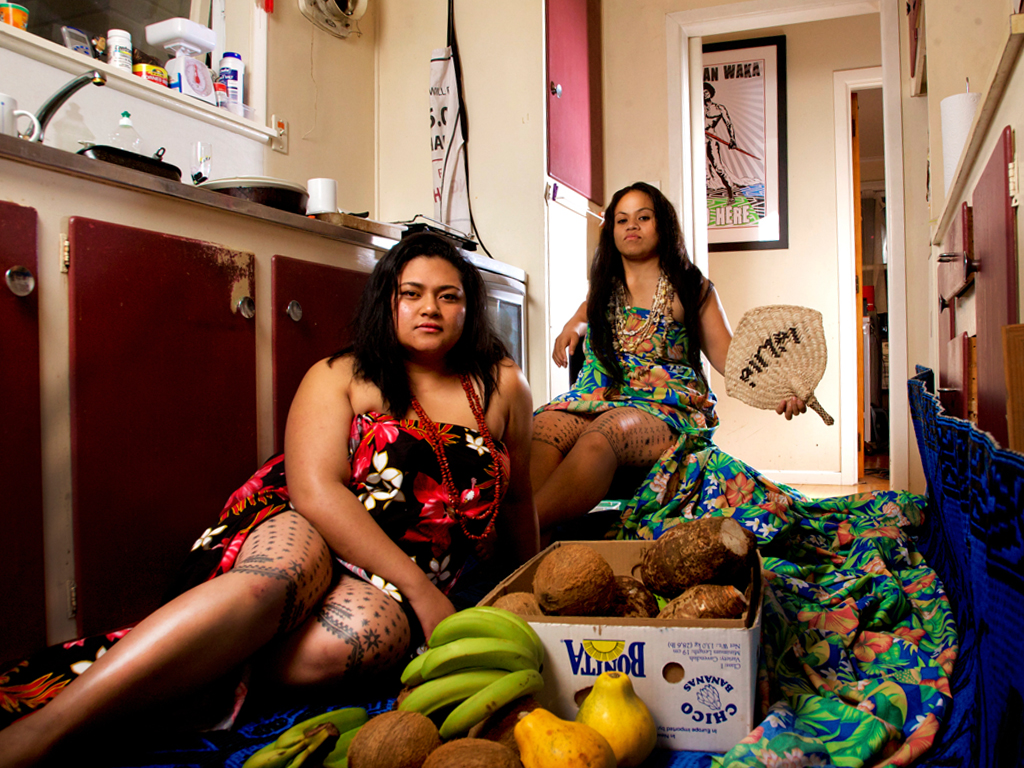
I’m excited to be producing my first arts project in Wellington next year! Entitled Between Wind and Water, the project includes an exhibition of new work by Tanu Gago, Leilani Kake and Luisa Tora, and a series of six events at Enjoy Public Art Gallery, where we’ll be collectively undertaking a two week residency from 10-24 January 2015.

Between Wind and Water is timed to coincide with the annual Positively Pasifika Festival in an effort to leverage off Wellington City Council’s civic celebration of Pacific cultures and communities. The project aims to attract and engage new Pacific audiences and symbolically centralise Pacific perspectives on contemporary art, interpretation and value.

An exhibition of new works by three South Auckland based artists provides the context for a series of talks, gatherings and activities offering audiences opportunities to discuss the artworks, themes, and wider context of making [and curating] art of and about Pacific experience in Aotearoa New Zealand.

BWAW Artists1

New media artist Tanu Gago has attracted significant attention for his staged photographs that reframe masculinity, sexual identity and cultural privilege. His video works are digital landscapes of new Polynesian pop culture, ‘ghetto narratives’ from 21st century South Auckland. Leilani Kake’s powerful video installations document family, ritual, cultural transmission and taboo. In a new and exploratory work, MALE – Māori or Polynesian, she begins to unpack stereotypes of criminality and the dichotomies of criminal/victim, brother/other. In Luisa Tora’s multidisciplinary practice, she employs visual codes and cultural references to interrogate historical and embedded power dynamics, value and values. Her installation, Naqalotu: Na qalo tu is informed by the origin story from her village in Kadavu (Fiji), symbolic relationships between people, histories, land and sea.

When one is between wind and water, they are said to be in a precarious or vulnerable position. Twenty years after Jim Vivieaere’s seminal show, Bottled Ocean, this exhibition project aims to stir the murky waters of contemporary Pacific art politics broaching issues of labels, positioning and expectations, diversity quotas, criticism and growth for Pacific art and artists in a post-identity era.

Public Programme Events

Pacific vs Art: A Discussion on Curating Pacific Art
Join writer-curators Ioana Gordon-Smith, Daniel Michal Satele and Between Wind and Water curator, Ema Tavola, in a spirited discussion facilitated by Sean Mallon, on Pacific art and the politics of engagement.
Time: 5.30pm
Date: Wednesday 14 January

Artist Talk: Leilani Kake
Exhibiting artist, Leilani Kake discusses the themes and inspiration for her new work, MALE – Māori or Polynesian, within the wider context of her video installation practice.
Time: 5.30pm
Date: Thursday 15 January

Oceania Interrupted: Empowering Collective Action – Meet & Greet
Meet members of Auckland-based collective, Oceania Interrupted, visiting Wellington to undertake the 8th of 15 Actions to raise awareness for West Papua.
Time: 5.30pm
Date: Friday 16 January

Naqalotu: Na qalo tu – A panel discussion on new work by Luisa Tora
Exhibiting artist, Luisa Tora will discuss her new work and themes along with guest speakers, Kaliopate Tavola (Kaidravuni.wordpress.com) on Fijian identity and totemic relationships, and Milena Palka (Marine Species Advocate, WWF) on shark populations and protection in the Pacific.
Time: 5.30pm
Date: Wednesday 21 January

Artist Talk: Tanu Gago
Exhibiting artist, Tanu Gago discuss the themes and inspiration for his new exploratory video work, The Sound of the Ocean.
Time: 5.30pm
Date: Thursday 22 January

BWAW Futures Forum
What does an ideal future look like for Pacific people in Aotearoa and Oceania? A series of quick-fire utopian dream talks from diverse Pacific perspectives, including Dr Teresia Teaiwa, Fuimaono Karl Pulotu-Endemann, Faith Wilson and more!
Time: 2pm
Date: Saturday 24 January
* This is the last event in the Between Wind and Water Summer Residency; closing drinks will follow this event.

Get involved

  • Draw a Suspect!
    Based on Leilani Kake’s new work, MALE – Māori or Polynesian, visitors are invited to create a hand-drawn suspect drawing from some interesting and familiar faces!
  • Between Wind and Water Publication
    Content for an exhibition publication will be generated throughout the residency; observations, photos, drawings and commentary from visitors will feature alongside extracts from dialogue events and extended artist statements. Meet and chat with the artists in the Gallery on most days between 10-24 January.

Dates

The residency of Between Wind and Water artists will take place from 10-24 January 2015; the exhibition will be on show until 31 January.

Venue

Enjoy Public Art Gallery is located on the First Floor, 147 Cuba Street, Wellington, Aotearoa New Zealand.

 Between Wind and Water has been produced with support from

BWAW sponsors1


Lanuola Mereia Aniseko

I’ve been on a break from blogging! My daughter Lanuola Mereia Aniseko was born on July 31 at Middlemore Hospital in South Auckland.

Motherhood has been a trip; I have found new depths within my heart and mind, and see the world in a brand new light – it’s pretty awesome. Lanuola is Fijian-Pākehā-Samoan-Tongan, from the villages of Neiafu (Savai’i, Samoa), Nukunuku (Tongatapu, Tonga) and Dravuni (Kadavu, Fiji). She is named after her paternal grandmother, her maternal Great-Grandmother and maternal Aunty.

Whilst managing a new baby, there have been some projects slowly on the boil. I received a grant from Creative New Zealand to produce an exhibition and residency at Enjoy Public Art Gallery in Wellington next January; a selection of works from the third Polyfest Portrait Project are finally going to be installed at the new Manukau Campus of Manukau Institute of Technology, and plans are underway to deliver a paper at the 2015 Contemporary Pacific Arts Festival Symposium in Melbourne next April.

In this relative downtime, I’ve taken Lanuola to quite a few shows… she went to the opening of Poly-Typical curated by Tanu Gago for Fresh Gallery Otara, checked out Urban Drift curated by Ane Tonga for Papakura Art Gallery, the Light Show at Auckland Art Gallery (an EXCELLENT exhibition for babies!), Rosanna Raymond and Sopolemalama Filipe Tohi’s solo exhibitions at Mangere Arts Centre, the newly rebranded Te Uru – an incredible new arts facility in Titirangi, West Auckland. And also Tagimoucia Gallery, the Gallery of Suva Prison in Walu Bay, Suva, Fiji – works by Epeli Labalaba and Pauliasi Delaibatiki were so striking and memorable – an amazing little Gallery well worth the visit.

Watch this space for updates on Between Wind and Water, the first project I’ve attempted to produce in a different city, largely with one hand! #MumLife

I was invited to speak at the 40th Pecha Kucha Night in Auckland last week, an acknowledgement of six years of collaboration with Pecha Kucha Night New Zealand founder, Luka Hinse.

In 2008, I was part of the first Pecha Kucha Night in South Auckland, presented as part of the Manukau Festival of Arts. I went on to curate and contribute to four more excellent Southside events at Metro Theatre, Mangere Arts Centre and a very special outdoor event in the Otara Community Courtyard in 2011. I’ve loved being involved with this inspiring event format (20 images x 20 seconds), Luka’s vision and his deep respect for South Auckland.

My presentation last week was entitled, Real Eyes, Realize, Real Lies. I wanted to speak about some current projects and the idea of community. Here’s how it went down…

01The title of my presentation is a reference to a line in a Tupac song… Real eyes, realize, real lies. This is a self portrait I did on one of the days that I listened to Tupac all day. When I realised that none of my friends appreciated Tupac the way I did growing up, I realised I needed new friends. His political and social commentary has influenced me for almost 20 years.

???????????????????????????????

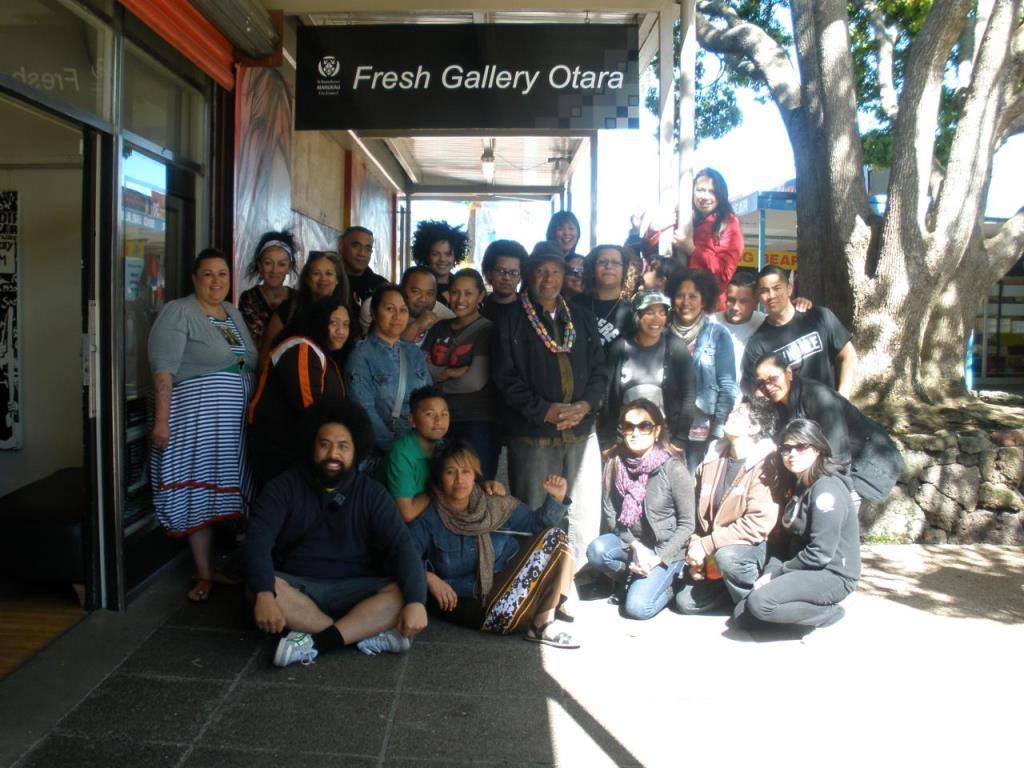
I used manage a community art gallery in South Auckland called Fresh Gallery Otara. Otara is a community I’ve lived in and around for the past 12 years; it’s a home away from home, a piece of the Pacific once removed. This was one of my favourite gatherings welcoming Emory Douglas of the Black Panther movement, to South Auckland in 2009. He returned last year to exhibit at the Gallery, but Fresh now is not what is used to be.

03I’m part of an collective called Oceania Interrupted, which was established by a very dynamic and passionate primary school teacher called Leilani Salesa. She initially called together Māori and Pacific women to participate in an artistic intervention to raise awareness for the plight of West Papua.

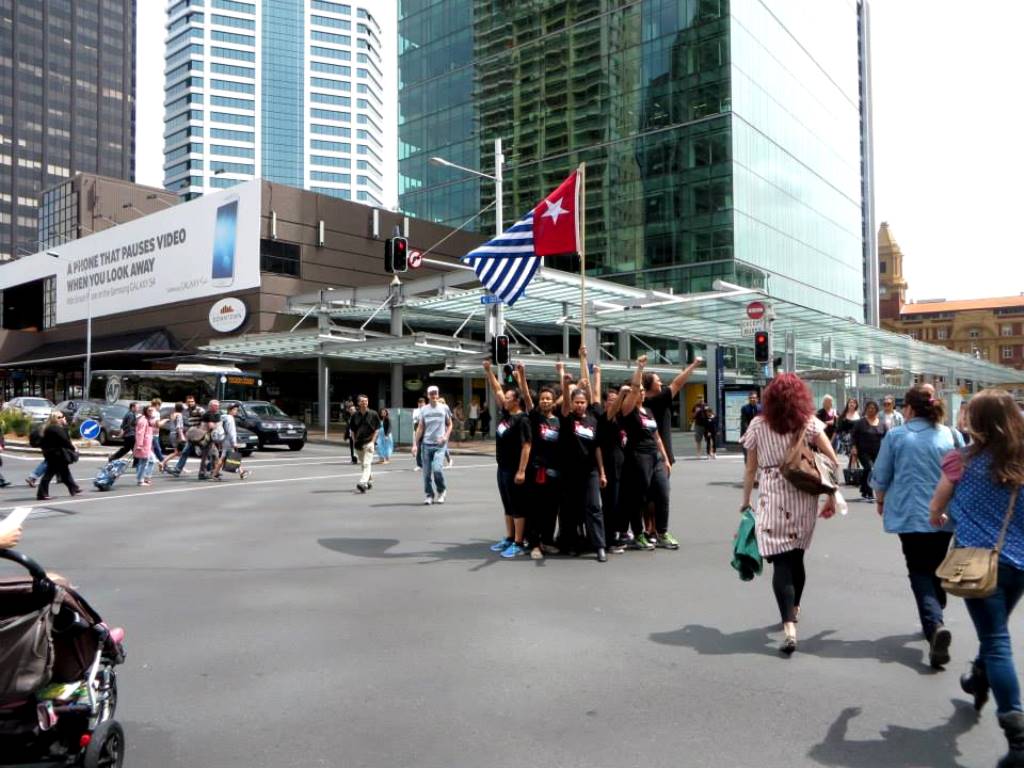
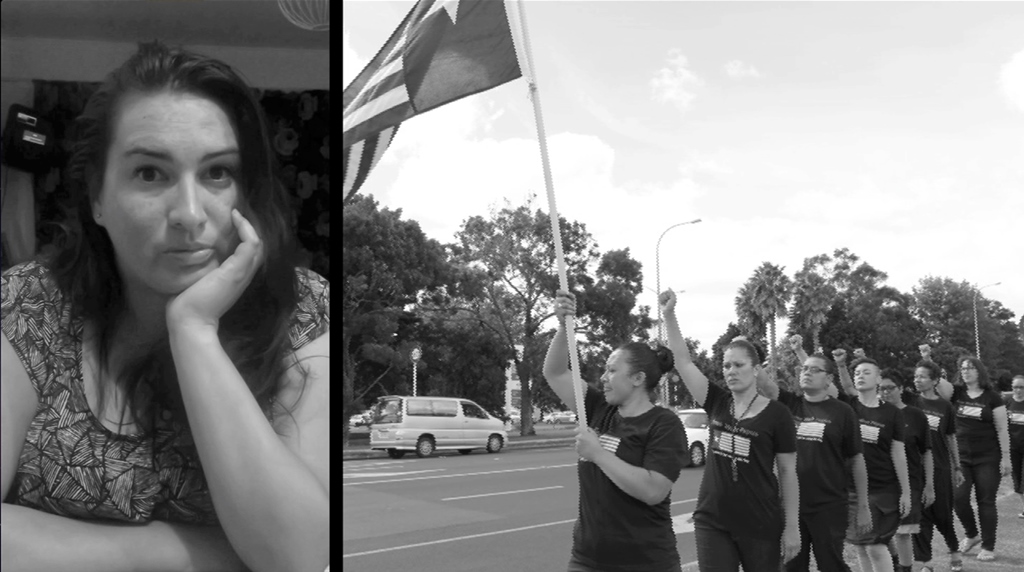
In a performance called, “Rise of the Morning Star” the West Papuan flag was raised 15 times at traffic intersections on Auckland’s Queen Street on West Papuan Independence Day, December 1st.

04

The number 15 is symbolic in reference to the high profile case of political prisoner of Filep Karma, who was sentenced to 15 in jail for raising the West Papuan flag. The plan became to do 15 interventions or Actions in and around Auckland and South Auckland to raise awareness and create discussion around West Papua, freedom and what can be done as New Zealanders.

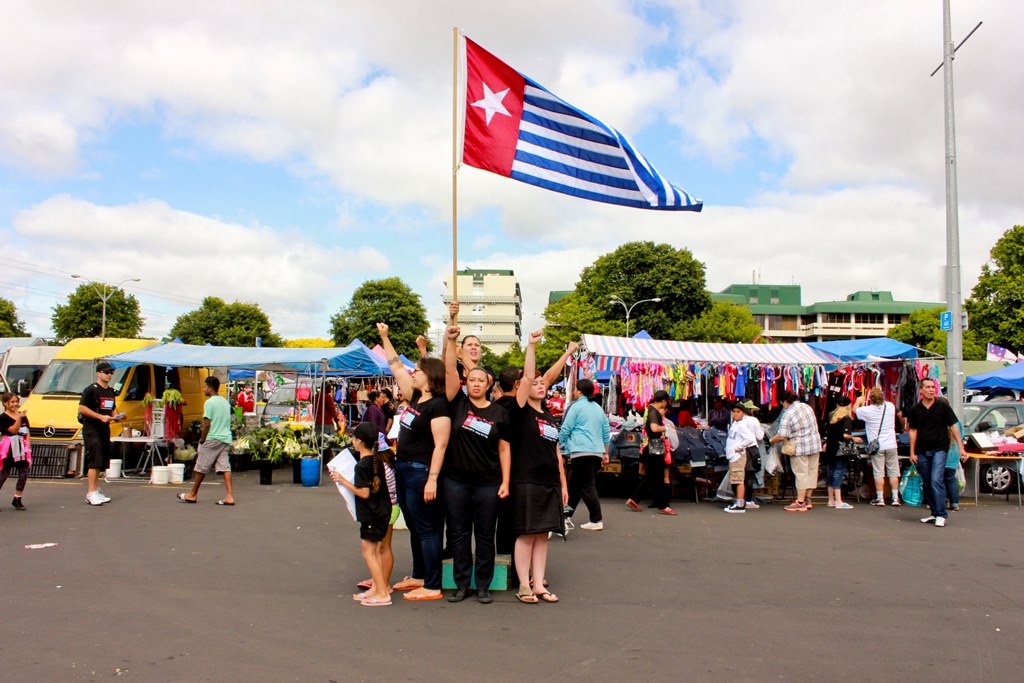
Action 2 took place at the Otara Market in December 2013.

05 Auckland’s Pasifika Festival was an ideal space to create visibility for the plight of Pacific people using Pacific bodies. This was Action 3 entitled, “Free Pasifika – Free West Papua”. 14 women with bare feet and bound hands, dressed in black lavalava adorned their faces with the Morning Star flag and marched silently from village to village.

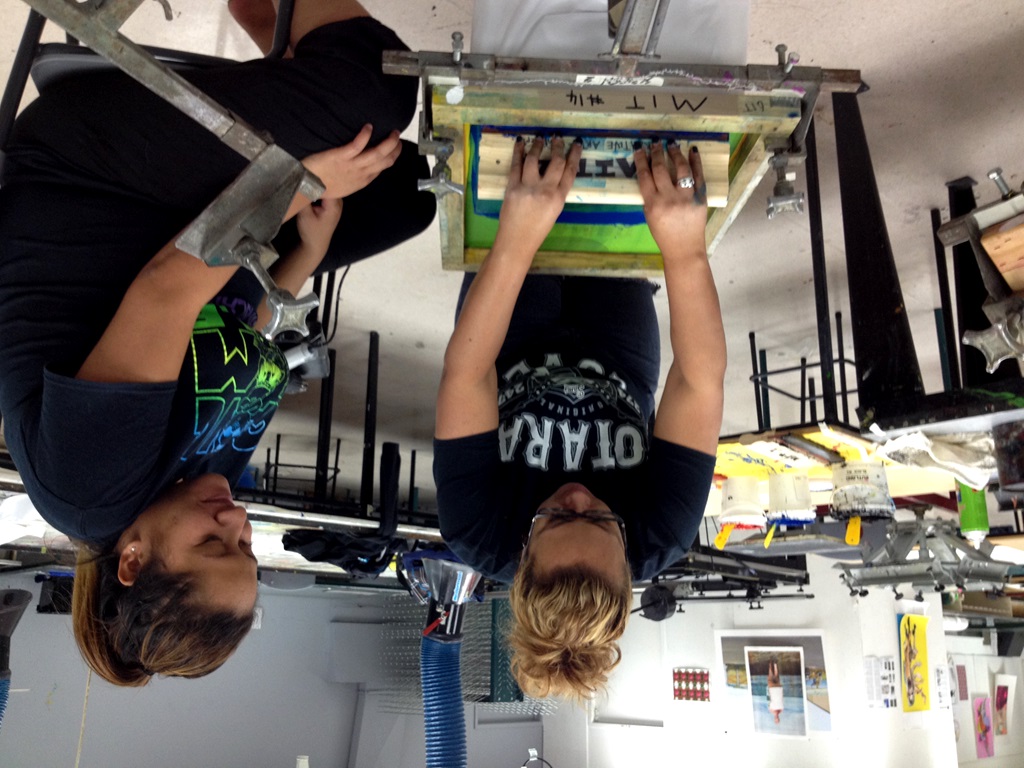
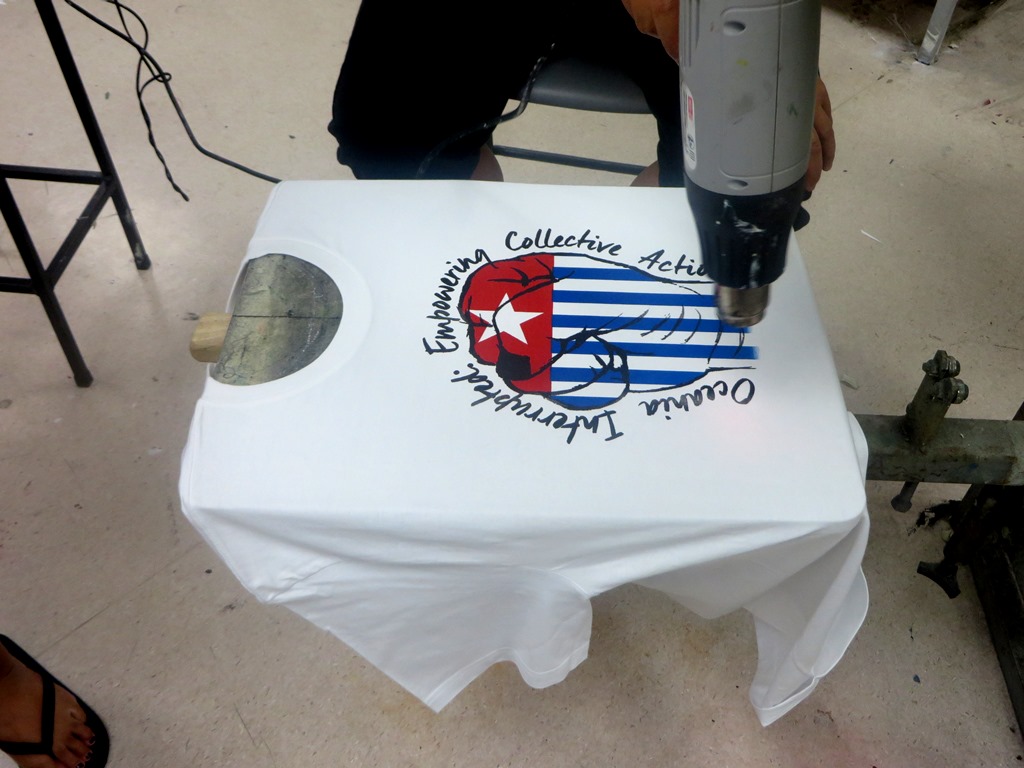
06Oceania Interrupted draws women together in different capacities – there are those who put their bodies on the front line, to perform and confront; those who hand out fliers and talk to the staring public, and those who work quietly behind the scenes. A project to make an Oceania Interrupted T-shirt was undertaken by MIT Faculty of Creative Arts student, Katarina Katoa.

???????????????????????????????With support from the Faculty’s print department, the t-shirt was designed and produced in Otara with funds committed by other women in the collective. The sale of Katarina’s T-shirts support Oceania Interrupted’s future actions and can be purchased from OceaniaInterrupted.com

This project was made possible with the excellent support of Steve Lovett, one of the most passionate and supportive lecturers I’ve had the privilege to learn from and work with.

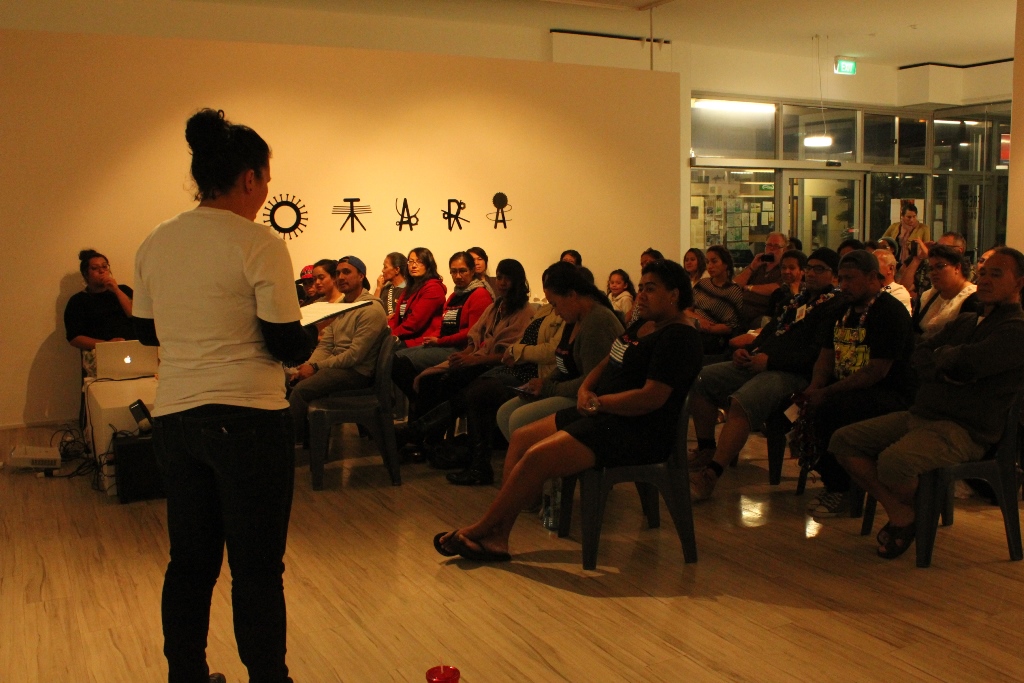
08 In a shift from performance-based interventions, Action 4 took the form of a video that invited women to interview people in their lives about freedom, visibility of Pacific issues and West Papua. 10 women participated contributing in excess of 24 individual interviews. Woven together with footage of past actions, the video was launched at a gathering on World Press Freedom Day, May 3rd at Fresh Gallery Otara.

09In essence, Oceania Interrupted strives to bring West Papua into the consciousness of the communities that surround us as Māori and Pacific women in Aotearoa. Our freedom is inextricably bound up with that of our Pacific West Papuan brothers and sisters.

Our next Action is on August 9, International Day of the World’s Indigenous People. Find us on Facebook for updates!

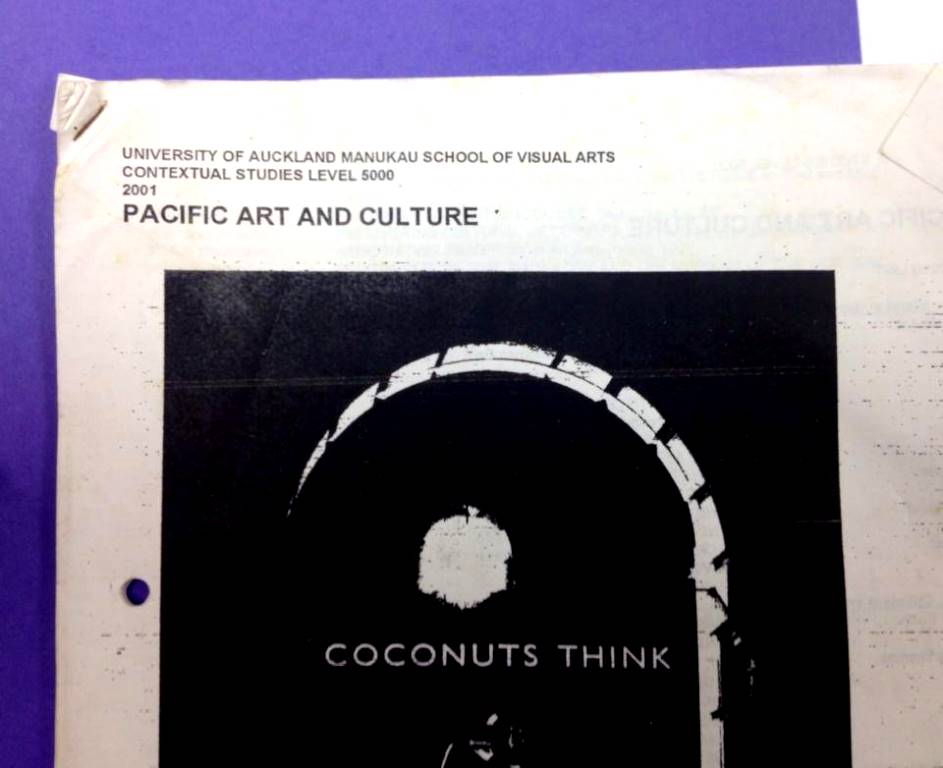
10I teach a paper at MIT Faculty of Creative Arts called Pacific Art Histories: An Eccentric View. It’s the evolution of a paper first developed for the Institute by Albert Refiti and the late, great Jim Vivieaere. Jim’s legacy plays heavy on my mind in this important role. I’m proud that Pacific art and culture has been discussed openly and thoroughly at MIT for the past 13 years.

???????????????????????????????My current class are almost midway through their degree studies; Pacific Art Histories is now a mandatory theory paper in year 2. The course covers topics including: misrepresentation and colonisation, gender and sexuality, curating, tattoo, online Pacific identities and global Pacific experience, hip hop and empowerment, diaspora problems and creative entrepreneurship.

12That last photo was taken with Fijian artist and activist, Luisa Tora; she produced a poster project for International Day Against Homophobia and Transphobia last month and discussed her curatorial process, personal position and politics with the class. Other speakers have included Samoan comic book artist and pro-wrestler Michel Mulipola and Tongan art historian and tattooist, Stan Lolohea.

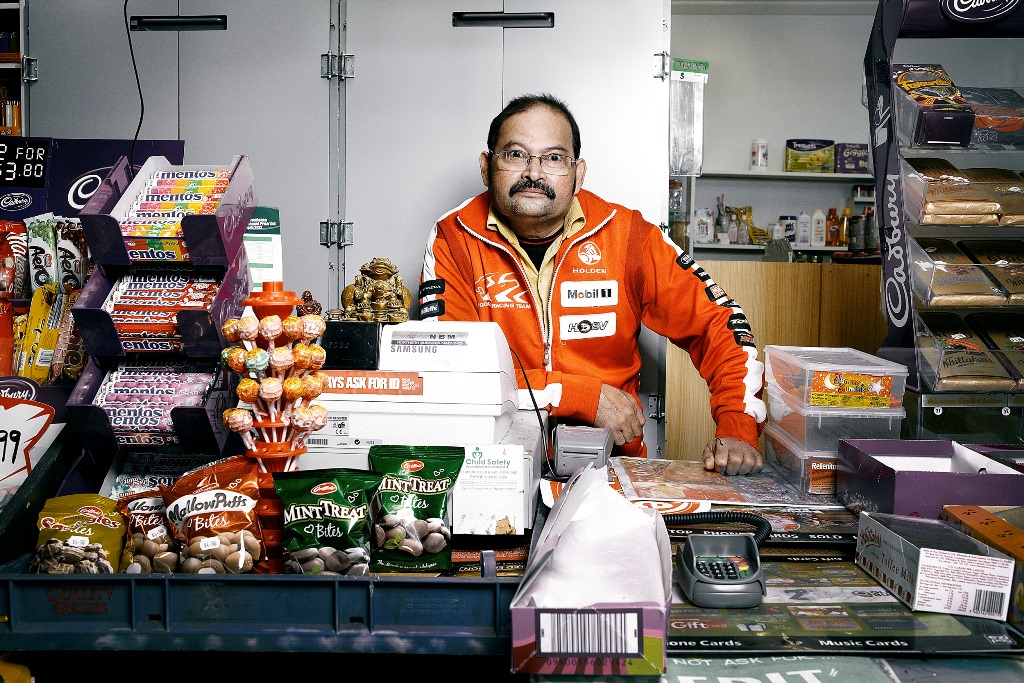
13A photographer I’ve worked with for the past 8 years is Vinesh Kumaran. He works as a commercial photographer and is passionate about portraiture; I’ve loved seeing his personal work develop over the years. This series entitled, “Open All Hours” documents dairy owners across the Auckland region; it’s inspired by Vinesh’s own history of working in his family’s dairy in Mangere Bridge. This is one of my favourite works from the series.

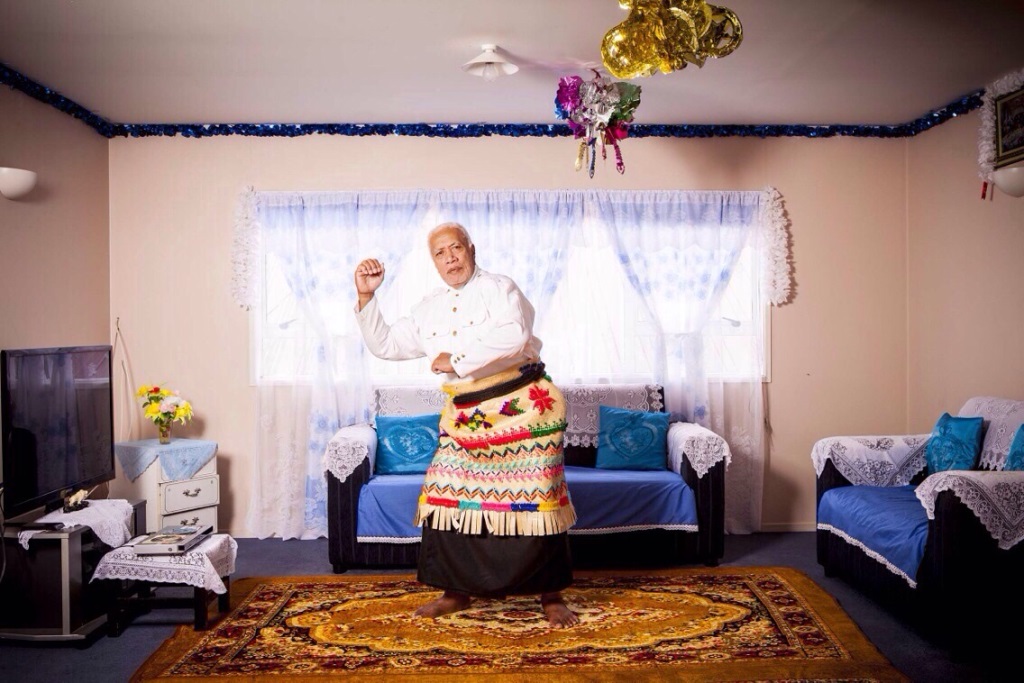
14Tu’itupou Aniseko is my partner’s father; he’s a stoic man, a proud Tongan. Vinesh was working on a series documenting Pacific people in their home environments, and Tu’i accepted the request to be photographed. He stood motionless mostly and then, broke out into Tongan dance.

He said of this photo, that this is the one he would want at his funeral – this is the way he wanted people to remember him.

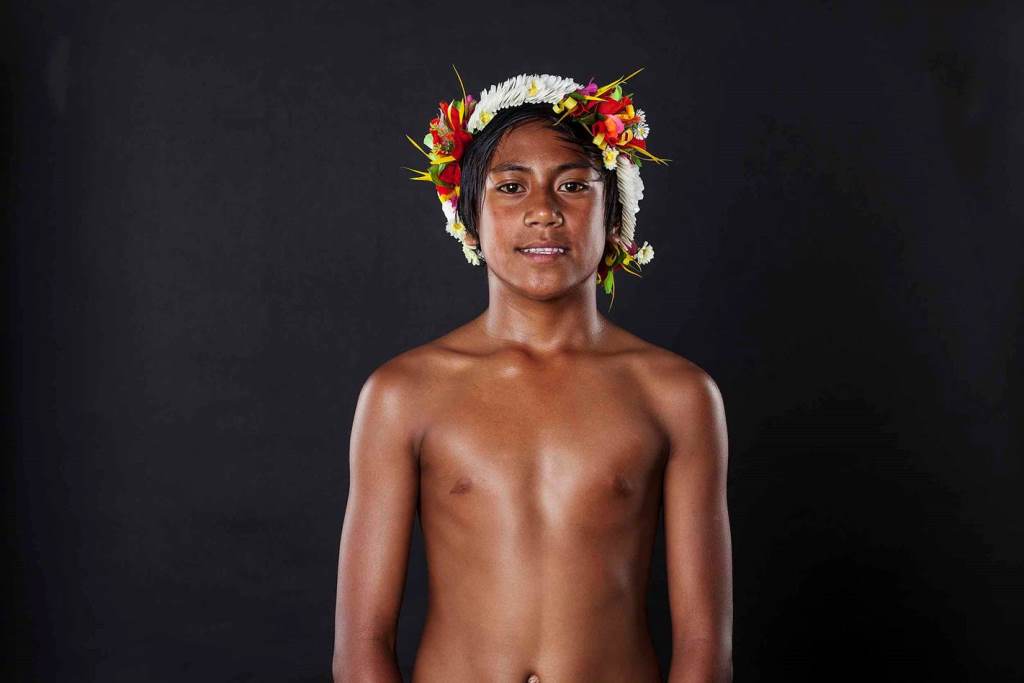
15Vinesh and I have collaborated on a portraiture series at the annual ASB Polyfest in South Auckland since 2009. We’ve set up a make-shift photography studio in a marquee and selected interesting and charismatic individuals to create series focused on style, hair and attitude. This year’s series, commissioned by MIT, was called “Portrait of a Generation”. This is John, he’s Tuvaluan, from Massey.

16What we aimed to do with the portraits we made at Polyfest was centralise the subject. That the image and the moment between the subject and the lens represents all that they are, their ancestors and their mana. There was no parallel agenda, no profit; I’m interested in the act of photography as empowerment… my people are not props.

17The last series we made at Polyfest created an opportunity for three Visual Arts students to assist on the project. They got insights into project management, client liaison and dynamics, photographing members of the public and explaining release forms. Their input in scouting for subjects created another dimension to this body of work that Vinesh and I really enjoyed.

18One of those students is Pati Solomona Tyrell, who featured in Samoan photographer, Tanu Gago’s 2012 series, “Avanoa o Tama”. Pati is Tanu’s partner in life and art. This work was first shown at Fresh Gallery Otara, went on to be shown at Auckland Art Gallery and later featured on the front cover of Art New Zealand. Tanu is another South Auckland artist I love and have had the privilege of working with.

19Tanu was awarded this year’s Auckland Festival of Photography Sacred Hill Annual Commission and his new series, “Tama’ita’i Pasifika Mao’i” opened last night at Silo 6. I love that Tanu talks about ‘creating a universe of Pacific identity’ from his unique position in South Auckland. Of this work, he explains the idea of capturing the exhaustion of performing culture for the dominant gaze.

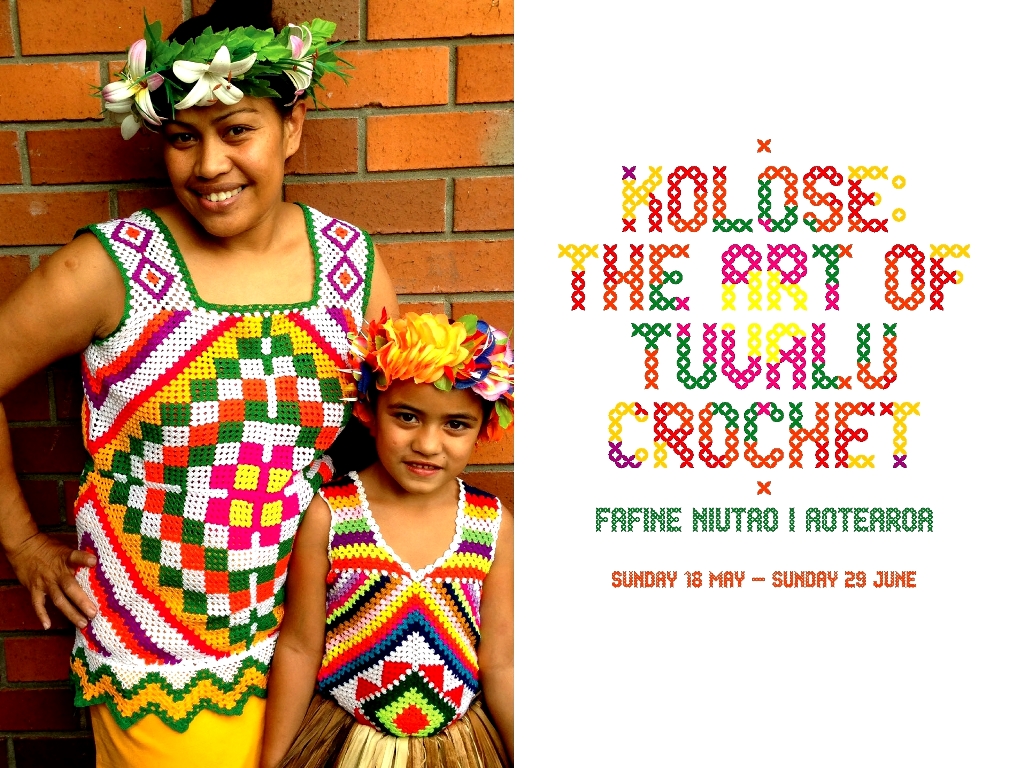
20Of all the ideas of I’ve just mentioned concerning culture, community, caring, of action and accountability… this is an exhibition that sums it up for me. Kolose: The Art of Tuvalu Crochet is currently on at Mangere Arts Centre. In my humble opinion, it is the best exhibition that has ever been presented there; a massive congratulations to Fafine Niutao i Aotearoa and curators Kolokesa Māhina-Tuai and Marama Papau!

It is a Southside must see!

3 Comments

Oceania Interrupted produced this video for a gathering on World Press Freedom Day, Saturday 3 May, in collaboration with South Auckland-based film maker, artist and activist, Tanu Gago.

As the fourth of 15 planned interventions to raise awareness for West Papua  in Aotearoa New Zealand, Action 4 took the form of a call for women to conduct interviews and discuss the issue of West Papua, visibility and freedom with people in their lives. The interviews are woven together with footage from previous Oceania Interrupted interventions or actions, along with imagery and footage that has inspired the collective.

I love being part of Oceania Interrupted; it is life-giving and deeply empowering. Massive thanks to the women who participated and to those who were interviewed, to Tanu Gago who laboured for many hours processing footage and editing, to all the women who have been involved and will be involved in future actions. To Fresh Gallery Otara for hosting our launch and gathering on World Press Freedom Day, to the Faculty of Creative Arts at Manukau Institute of Technology for supporting the project and to everyone who has contributed to this collective effort. We ALL share one love for West Papua and in small ways, hope to be contributing to broadening awareness, mobilising action and affecting change.

Oceania Interrupted: Empowering Collective Action
#FreeWestPapua

More information: www.OceaniaInterrupted.com

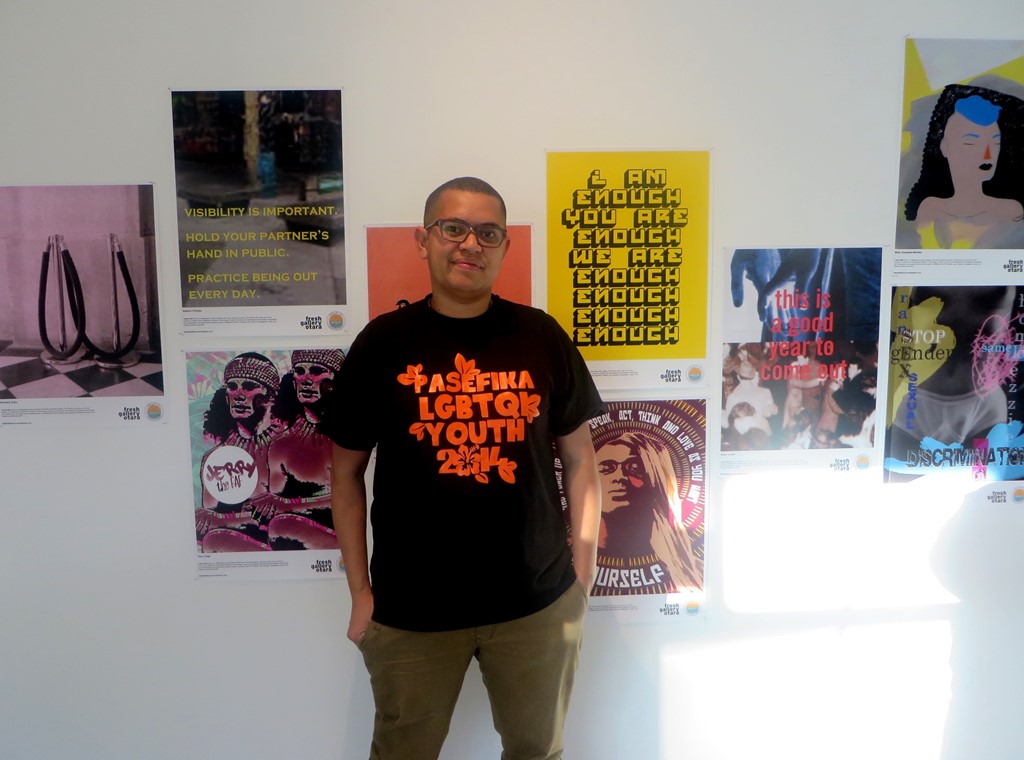
I STAND WITH YOU is a project developed by Luisa Tora, a third year Visual Arts student at Manukau Institute of Technology Faculty of Creative Arts in Otara, South Auckland.

Marking International Day Against Homophobia and Transphobia (IDAHOT), the project features 13 artworks produced as posters for display at both the Faculty of Creative Arts and in a pop-up exhibition at Fresh Gallery Otara from 12-17 May, 2014.

I’m pleased to have partnered on this important project along with the Faculty of Creative Arts, Fresh Gallery Otara and FAF SWAG. The artists involved have produced an excellent body of work; they represent students, staff, alumni and friends of the Faculty of Creative Arts, each with a unique relationship to South Auckland.

I’ll be speaking as one of seven quick-fire lunchtime artist talks on Tuesday 13 May from 12.30pm at MIT Faculty of Creative Arts, 50 Lovegrove Crescent, Otara, South Auckland – all welcome! The project’s other public event is a lunchtime panel of LGBTQI youth service providers on Thursday 15 May at 12.30pm. On the actual IDAHOT day, Saturday 17 May, artists, friends and family are invited to morning tea at Fresh Gallery Otara at 11am.

The posters are not for sale, but check out the project’s website and contact page for enquiries.

Auckland-based collective Oceania Interrupted launches its fourth of 15 planned ‘Actions’ on World Press Freedom Day, Saturday 3 May at South Auckland’s Fresh Gallery Otara.

Oceania Interrupted Action 4: Freedom is... Video Project

Oceania Interrupted Action 4: Freedom is… Video stills

Formed in November 2013, Oceania Interrupted is a collective of Māori and Pacific women committed to undertaking public interventions to raise awareness for issues that affect Pacific Islanders both here in Aotearoa and throughout the region. The collective is currently engaged in producing a series of 15 Actions to raise awareness and demonstrate solidarity for the people of Papua and West Papua.

Past Actions have been performance based; women have assembled to march silently with the Morning Star flag down Queen Street in the Auckland CBD (Action 1: The Rise of the Morning Star), through the notorious Otara Market (Action 2: All We Want for Christmas is a Free West Papua) and most recently at Auckland’s Pasifika Festival (Action 3: Free Pasifika – Free West Papua).

All I Want For Christmas Is A Free West Papua, photo by Tanu Gago

Action 4: Freedom is… takes the form of a video project and gathering to mark World Press Freedom Day. Oceania Interrupted extended the invitation to participants to produce their own videos asking people in their lives about the meaning of freedom, awareness of West Papua and the visibility of the Pacific in New Zealand mainstream media. Filmed on phones, cameras and tablets, the contributions were collated and edited together with footage from past Oceania Interrupted performances by Samoan artist and activist, Tanu Gago.

Designed by Katarina KatoaDrawing attention to the power and privilege of media freedom, and freedom of expression, the Action 4: Freedom is… video will be launched on YouTube at 5pm on Saturday 3 May at a gathering at Fresh Gallery Otara.

Bringing together participants, supporters, families and friends, the Action 4: Freedom is… gathering is an opportunity to discuss and broaden awareness for West Papua as well as invite contributions for future Oceania Interrupted actions.

A limited edition Oceania Interrupted T-shirt has been designed by Cook Islands visual arts student, Katarina Katoa, who is currently completing a Bachelor of Creative Arts degree at Manukau Institute of Technology. Katatrina has undertaken the project as part of an internship for PIMPI and Oceania Interrupted; the t-shirts have been designed and hand screen-printed in Otara, South Auckland with support from the Faculty of Creative Arts. They’ll be for sale at Fresh Gallery Otara on Saturday 3 May from 5-7pm for NZD40. All proceeds raised go towards future Oceania Interrupted Actions.

Oceania Interrupted Action 4: Freedom is… | 5-7pm, Saturday 3 May | Fresh Gallery Otara

ALL WELCOME!

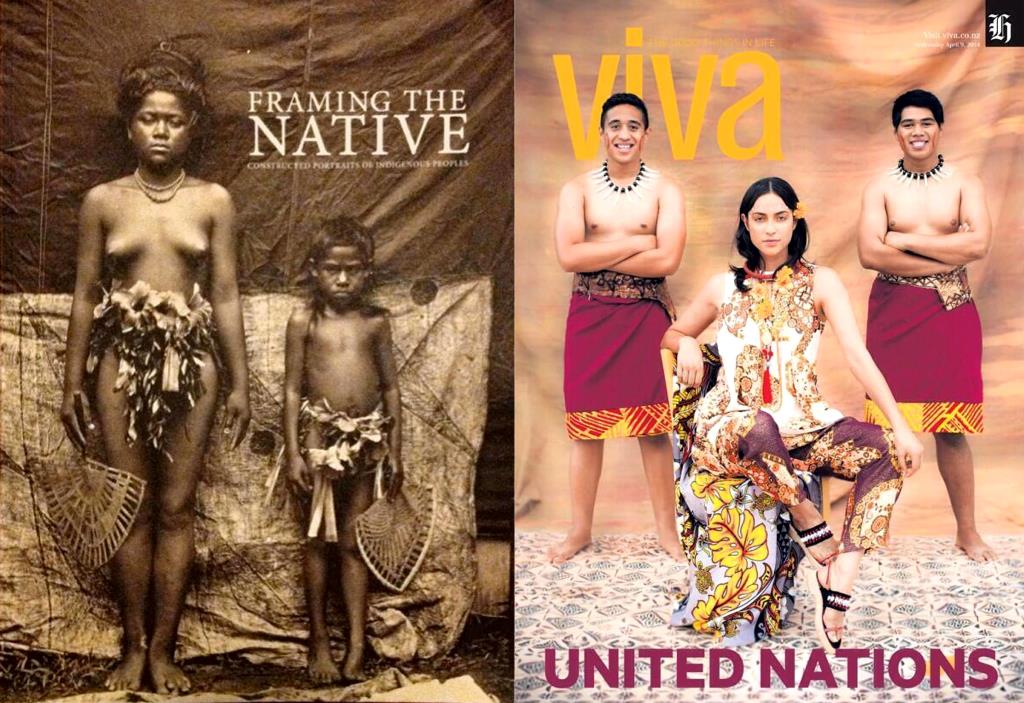
I thought about writing a lengthier response to the New Zealand Herald’s Polyfest themed fashion editorial published last week, but the intellectual energy I started to exert far outweighed the substance and meaning of this photo shoot.

ASB Polyfest, like Auckland’s Pasifika Festival, has been photographed to death. Everything smiling, waving, colour-saturated, bare-chested and culture adorned has been snapped, posted, shared, tagged and promoted a million times. The colour (and colour) of Polyfest adds much needed flavour to a lot of publications and websites and the Polyfest theme of the New Zealand Herald’s fashion editorial entitled, GLOBAL WARMING, does just that.

The photo shoot depicts a central model wearing a selection of ‘ethnic’ outfits including pieces by New Zealand designers, Balinese beads and Polynesian mats, feathers and garlands. In each photo, she is flanked by ‘ethnic’ people, wearing their own outfits which are largely performance costumes; the model’s human context are performers and parents from Polyfest. She models and the context performs; it’s an interesting juxtaposition of constructed awkwardness, commerce versus culture, connection versus disconnection, power and the Gaze.

I was pleasantly surprised to see that the young people pictured alongside the editorial’s central model have been named. Their schools and some information of their cultural attire is mentioned too. Following this detail, the model’s outfit is broken down financially, piece by piece, dollar for dollar. But there is no financial value assigned to the costumes of the performers.

Through discussions online and off with people who share sentiments of frustration, disappointment and general irritation at this photo shoot, the representation of Pacific Island young people in a mainstream media publication in New Zealand also inspires pride amongst some. The resemblance to 19th and 20th century constructed portraits of Pacific Islanders is slightly haunting, but perhaps its reflection on 21st century cultural politics is even more disturbing.

Whilst the stylist has approached me personally to validate his intentions, research and academic enquiry that has informed this photo shoot, I like many have responded not only to its visual language, but to the murky politics of representation of the marginalised Pacific Island ‘Other’ by dominant culture. I’ve often said that South Auckland’s ASB Polyfest is the most significant Pacific cultural event in New Zealand for its sheer numbers, its energy and its history. It started in 1975 at Sir Edmund Hillary College in Otara and has always centralised Polynesian young people, their families and communities in a celebration of cultural pride and excellence. The use of Polyfest as a backdrop, a prop shop and human landscape to showcase expensive ethnic-inspired fashion is not glaringly offensive, but definitely very uncool.

In a month that has seen The Big Idea, a New Zealand creative industries website, publish a mind-bogglingly offensive review of Pacific poets from South Auckland, and TV3 / Newstalk ZB broadcaster Rachel Smalley declaring all women over 75kg a ‘load of lardos’, it feels like New Zealand is becoming an increasingly inhospitable place to be big, brown, vocal and culturally entrenched. This excellent blog post by Jessica Hansell / Coco Solid has been the highlight of my month – thank God for Pacific Island writers and thinkers, and thank God for the social networks and commentary that enable and foreground alternative perspectives on Pacific Island lives and experience in Aotearoa.

An excellent read!

tuliathompson's avatartulia thompson

Michael Botur recently wrote an article on The Big Idea about Pasifika poetry called ‘Mouths from the South’. He focuses mostly on the spoken word poetry associated with South Auckland Poets Collective, but also draws in notable Pasifika poets including Karlo Mila and Selina Tusitala Marsh. Throughout the article, Botur maintains a tone of mild condescension, stating:

 [Writers like Mila and Marsh] set the scene for several NZ poets who wouldn’t be in print at all were it not for Pacific publishers, leaving old fashioned scribes behind.

Hang on, who we are leaving behind?

The article has already been challenged through a response piece on Facebook by poet Grace Taylor, and poetry heavyweights Tusiata Avia and Hinemoana Baker have left stunning responses in the comment section (you can read them by scrolling down from Botur’s article).

What I want to explore here is how Botur draws unwittingly on a…

View original post 799 more words

I made a series of collages for the #Tattoo4Tonga fundraising effort last month inspired by a visit to Auckland Museum. Associate Curator Pacific, Kolokesa Māhina-Tuai bought one the works in my Paper Breastplates Series and wrote this blog about the inspiration that stemmed from a quick visit to the Auckland Museum store room! Click here to read more…

Click to read more

Click to read more

Photo by Ema Tavola

The OTARAcube is a permanent exhibition space in the Otara Town Centre; it is a 10×10 foot customised container gallery managed by Manukau Institute of Technology Faculty of Creative Arts developed with support from the Otara-Papatoetoe Local Board.
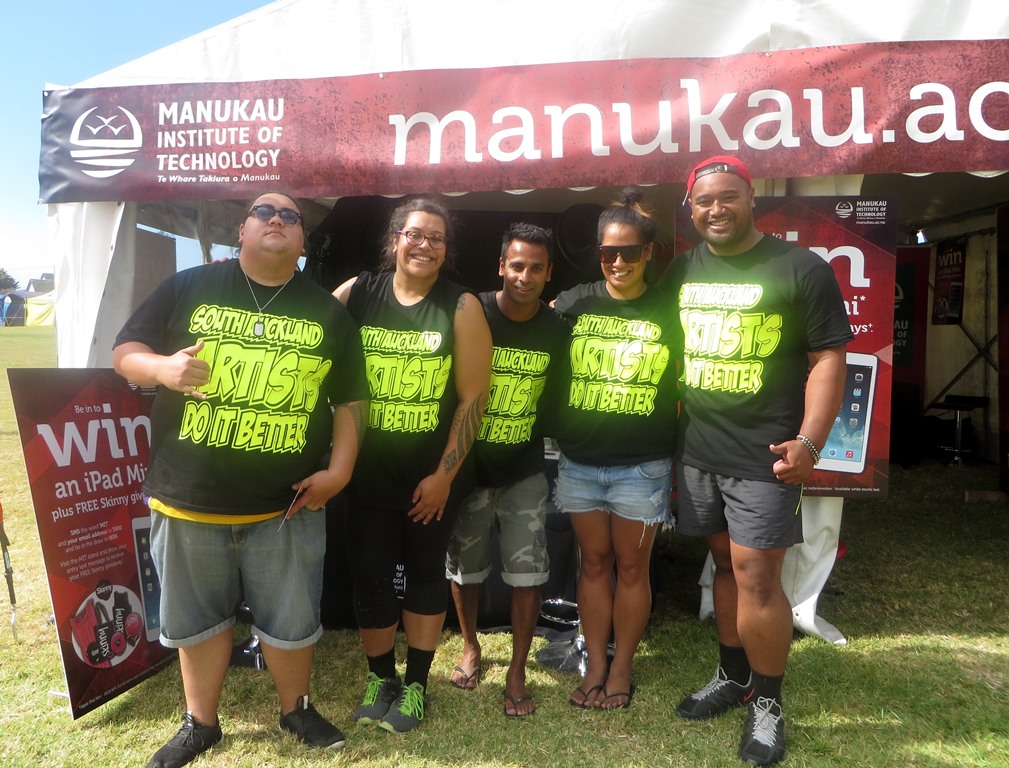
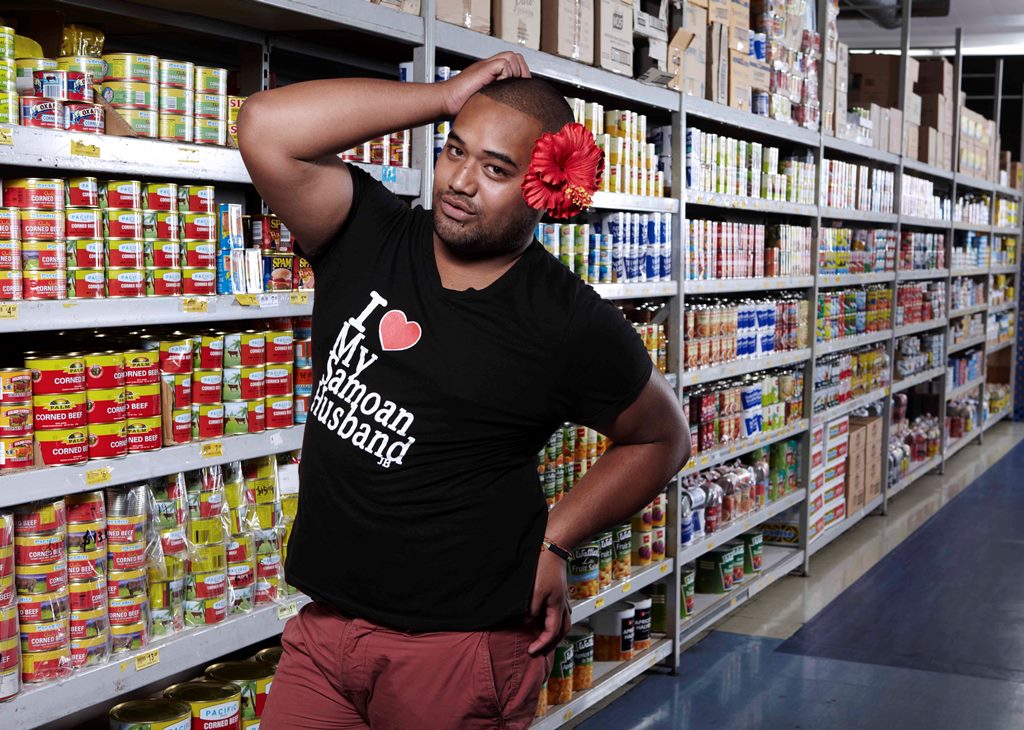
A week-long event called Proudly Otara is taking place in the Otara Town Centre this week and to mark the occasion, I’ve installed a quick pop-up exhibition showcasing photos, posters, fliers and artwork from community art events that have taken place in and around the Otara Town Centre over the past decade. The material is from both my own and Fresh Gallery Otara’s archives; the Gallery’s programming since 2006 is well represented, but there is also material from Fresh Gallery Otara’s predecessor, Artnet Gallery, which ran up until 2004 and was managed by Wahine Malosi Charitable Trust. Artnet Gallery was where I cut my teeth as a curator; it was a foundation that embedded a sense of community arts service delivery and relational accountability deep into my psyche.

This past week, I was interviewed by Justin Gregory for Radio New Zealand’s weekly arts programme, Standing Room Only. In January, I presented some concerns to the Mangere-Otahuhu Local Board of Auckland Council regarding the exhibition programming at Mangere Arts Centre, a community arts facility in the Mangere Town Centre. I’m concerned with the disconnect regional arts programming has with local communities under the unitary Auckland Council and that there are no public opportunities for feedback or dialogue between those who produce local arts programming and the audiences they supposedly serve. The Mangere-Otahuhu Local Board were responsive to the concerns I raised saying that similar sentiments were felt both within the Board and from community members; they planned to follow up with Auckland Council’s Arts and Culture unit to respond but as yet, I’ve heard nothing. The Manukau Courier published a story and since then, I’ve received a huge amount of support from South Auckland residents who believe strongly in what was said.
Radio New Zealand’s story was aired on Sunday 23 March and features comments from Hanna Scott, Arts and Culture Programmes manager for Auckland Council:

[audio http://podcast.radionz.co.nz/sro/sro-20140323-1245-local_galleries_and_the_community-00.ogg|titles=Local Galleries and the Community, Standing Room Only, Radio New Zealand, 23 March 2014]

Interestingly, I listened to this whilst installing the Proudly Otara exhibition at the OTARAcube. Whilst the exhibition only represents a sliver of the arts and cultural events and activities that have happened in and around the Otara Town Centre since 2003, there is an overarching theme of community accountability and ownership. The voice and visibility of community aspiration and pride is at the forefront of what I’ve been fortunate enough to produce and be involved with during my time here in Manukau, South Auckland. For people who live and work here, a connection to this community is not as simple as catching a “South Auckland bus” (Hanna Scott) and relational accountability is demonstrated in action, not just words.

I’m happy that from a blog, which led to a presentation to the Mangere-Otahuhu Local Board, that inspired a story in the Manukau Courier, a national radio discussion about Auckland Council’s accountability to the Mangere and wider Manukau community has happened. I’m also developing an article for an upcoming issue of The Vernacularist on the theme of community and relational accountability – watch this space!

Proudly Otara starts today in the Otara Town Centre and this morning, Toakase Women’s Group have presented an impressive display of Tongan hand-crafted adornment. There are performances, displays and activities scheduled for the Otara Town Centre stage areas throughout the week; check out the Otara Business Association Facebook page for more details.