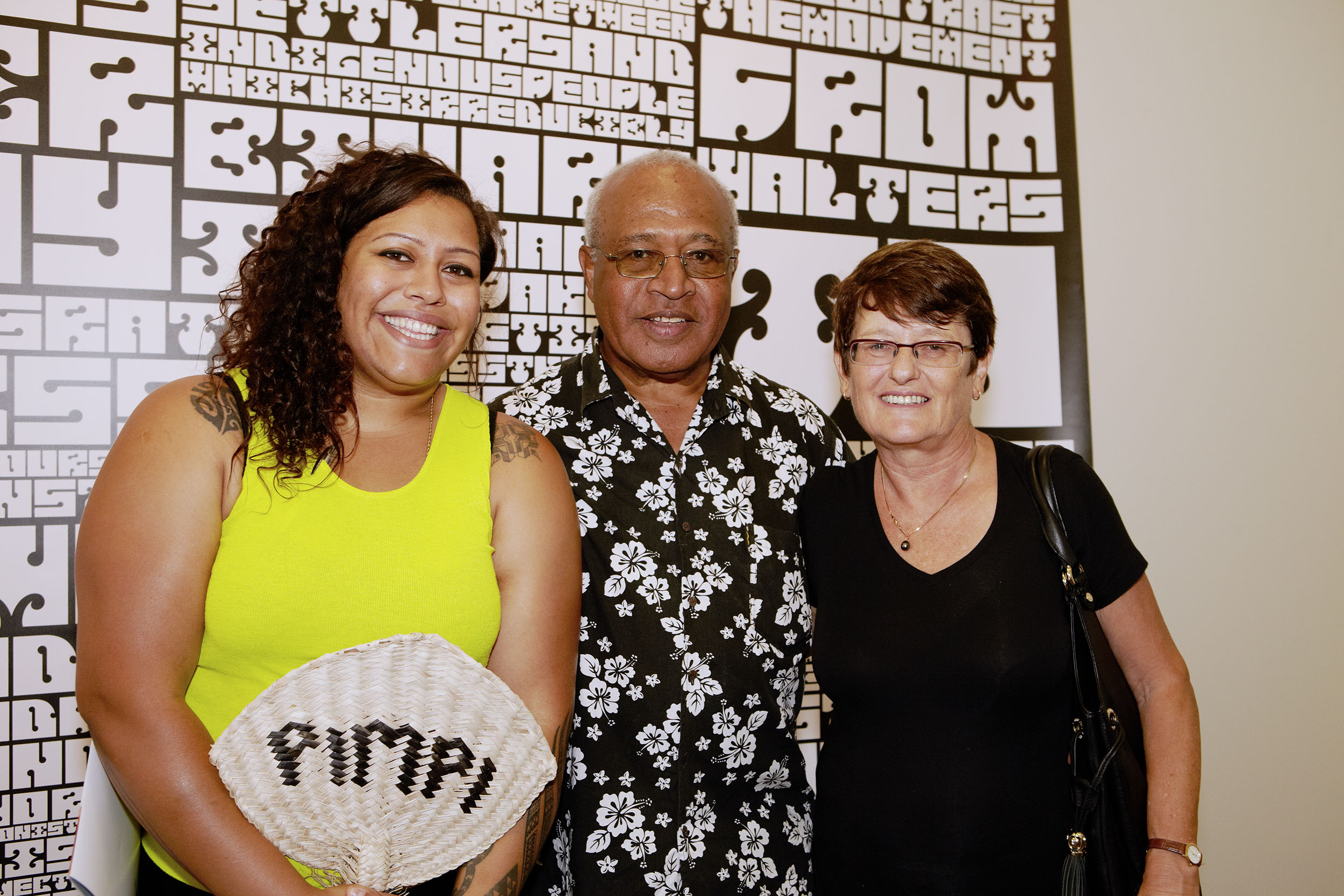
I don’t log into Facebook under the personal profile page that my partner and I share very often, but when I do I see updates from an amazing organisation here in South Auckland called Sands Manukau. Having experienced the loss of our baby last year, Sands Manukau provided some of the most significant support during a period of horrific heartbreak. I see their updates and think of the amazing generosity and strength of the people who work for this cause.

The blog wars and art hype that has created unprecedented traffic and dialogue on my website over the past few days represents time and energy invested in a marginal area of my life. Art is a luxury I fit in and around caring about things like cooking, growing food, paying bills, rats in my roof, writing assignments for my Master of Arts Management degree, family politics…

In my day I think about people who work for people in need, people who do what they can, like the hummingbird. I think about the local government election hoardings on every fence line in my neighbourhood and wonder whether local body politics is in any way engaging Pacific young people to feel included in governance and power structures.

Being away from South Auckland made me grateful for the little things, like hearing Pacific music and language on the radio all day and that events like the launch of Samoan writer, Lani Wendt Young‘s third and highly anticipated book, The Bone Bearer is taking place this weekend in Manukau.


When I court art controversy, I think about all the times I’ve sat around advisory tables feeding into decisions that affect whether people get funding and opportunities. I know my actions carry consequences and there will always be people who invest time and energy in discussing the credibility of my work and position. Whilst bridges burn, the river changes course and new pathways emerge, i.e. new doors are always opening for me and I move in time with my heart – doing work that I believe is important.

In a nutshell, I’m happy to be back in South Auckland.
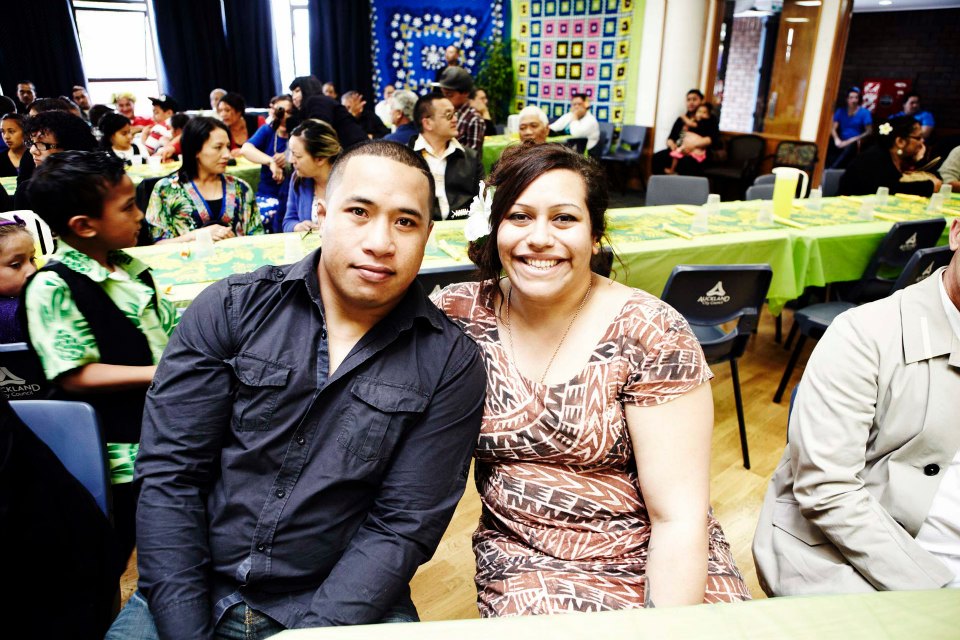
From a week of talks on art and history, hearty discussion about accountability and representation and nine nights of sharing a bed, a bathroom, space, time and energy with three excellent and fierce Pacific women thinkers, I’m happy to be home with my Mr Man.

The past year has been a transition from a full-time job, managing and curating a gallery in a space I love and care about, to working freelance, studying full-time and slipping quietly into a gender role I never thought I’d inhabit. When I worked long hours as a public servant, I longed to spend more time at home. Now, I study, read, cook and clean and manage a tight budget whilst I finish studying and Mr Man works full-time to help me achieve what I need to achieve. He’s a good man.

I got a cool message before from someone who has been reading my blog as I hyper-post my way through the #31WriteNow blog challenge. It made me realise that blogging everyday for 31 days is exposing 31 shades and dimensions of my life and thinking, my experiences and values; it’s slightly disconcerting given that, if you don’t follow me on Twitter, I’m a pretty private person. Even more disconcerting when comments come back at me dissing my family, my upbringing, the paper I delivered at the Pacific Arts Association International Symposium amongst other points of contention / targets for abuse.

So, here’s to being loved and being supported – knowing there’s someone who has your back and will fight your fight with you. To the good men and women who love and support artists, whose work is often emotionally taxing. Thank you for grounding us, and ensuring we remember what is actually important.

Photo by Vinesh Kumaran


Breastplate

I’ve spent quite a bit of time this past week at the Museum of Anthropology at the University of British Columbia. The building is quite gorgeous and reminds me of Selasar Sunaryo Art Space in Bandung, Indonesia. The juxtaposition of old and new artifacts is intriguing and feels as if the past is activated in the present.

We spent some time on our last day in the Multiversity Galleries, where thousands of objects from around the world are on display in busy display cabinets and conservation drawers. The entire collection is browsable online here. It’s a bit overwhelming; the histories and cultures that surround you create such a mass/mess of energy.

The Fijian collection objects are grouped in relation to a consideration of gender, status and ceremony. In just a couple of meters and few drawers, Fiji and Fijians are summerised. These collections generally represent more about the collector than the collected; the Multiversity Galleries are a fascinating reflection of culture collecting, and the culture of collecting.

I’ve been interested recently in Fijian breastplate design; I made an impromptu appliqued hoody before leaving for Vancouver and I’m developing drawings at the moment for a new work in an upcoming exhibition.

At the Pacific Arts Association International Symposium, members of the Fijian Art Research Project delivered some fascinating papers about collecting, breastplates, Fijian liku, tattooing and weaponry. Professor Steven Hooper’s paper, Uncharted Histories of Ivory-Carving Canoe Builders and Canoe-Building Ivory Carvers in Western Polynesia, included some beautiful examples of breastplate design and construction, many of which I had never seen before. I kept thinking about the way in which a breastplate protects the heart.

The lone civavonovono (Fijian breastplate) on display in the MOA Multiversity Galleries collection is beautiful but maybe a bit lonely, so far away from home.

In 2006 I attended, Vaka Vuku: Navigating Knowledge, a Pacific Epistemologies Conference at the University of the South Pacific in Suva, Fiji. For the highly considered diversity of academic enquiry, the conference’s inherent rootedness in Pacific ways of seeing and thinking, and almost by default, the exceptional showcase of hosting and hospitality, Vaka Vuku: Navigating Knowledge has set the standard for inspiration, event delivery and thought leadership; it transformed my thinking.

It may be the jet lag, but there have been talks in the Pacific Arts Association International Symposium that have literally made my contact lenses fall off my dried up eyeballs. This is what I mean when I say, dryballz.

But, there have been two speakers who have activated my thinking about the Ocean.

Michael Nicoll Yahgulanaas delivered a keynote presentation on the second day of talks. His consciousness for environmental truth and damage made me reflective of my role and what I can do. His environmental parable, Flight of the Hummingbird, is a sweet reminder that every little bit counts. The story is animated here and the book is available on Amazon; it’s a beautiful thing.

Cook Islander Eruera Nia discussed the re-thinking of traditional Ocean boundaries to protect and honour that which sustains Island life. It was a moving tribute, within the context of this forum, to the source of life, people and culture in our region.

This week has been full of signs that have galvanised my thinking about returning to Fiji. In a more poetic way, I might say that the Ocean is whispering to me to return, but my homing call is an incessant alarm: it is time to come home.


In the context of the Pacific Arts Association International Symposium, I had no idea that I would experience a sense of marginalisation and at times complete invisibility as a Pacific Islander… amongst indigenous people.

There are strong relationships between indigenous people who are minorities in their own countries. Their cultural revitalisation is a result of survival from severe acts of colonial domination and there is a natural affinity with those who have shared this experience. Maori represent the progressive and exciting potential of working in partnership with the Settler government to create all manner of opportunities for their community to prosper, reconnect and develop. Observing the nature of the relationship between Maori and the Musqueam community, the traditional landowners who have hosted the Pacific Arts Association International Symposium, has been fascinating and eye-opening.

Living as a Pacific Island migrant / guest in New Zealand has never felt more apparent. Tensions exist between Maori and Pacific communities and whilst there are spaces and places where indigenous connectedness is celebrated and explored, the social dynamic is ever present. Whilst I have worked with Maori artists and curators, and artists like Margaret Aull, Leilani Kake, Janet Lilo and Cerisse Palalagi who share both Maori and Pacific Island ancestries, I don’t venture or fully immerse myself into the territory of Maori art and culture often.

Whilst the conference itself represents a breadth of research from source countries across the Pacific region, the amount of Pacific Islanders here is fairly small. I’ve enjoyed reconnecting with Jeke Lagi, a Fijian artist from Suva, and sharing memories of Pacific Islandisms with Kolokesa Mahina-Tuai, Dan Taulapapa McMullin and Tarisi Vunidilo.

Feeling lonely so far away from home is quite depressing, but thank God for YouTube; this video always fills my heart with warmth.

1 Comment

We travelled by American school bus to the Musqueam Cultural Centre on the morning of August 7. I was excited to learn that the first day of the Pacific Arts Association International Symposium would take place in such a great space. With young people and artists milling around, located in the heart of the Musqueam Reservation and on the water’s edge, I loved the setting and felt excited to deliver my paper within that context.

I always appreciate the opportunity to speak last, and in this case, it was an opportunity to salvage some professionalism after my fellow panelists delivered poorly prepared and disorganised presentations, surprising given that both of them had secured grants to travel and participate in this conference. I have felt the weight of every ounce of investment from those who supported the #2girls1conference fundraising campaign; my paper was a small way to honour those who invested in Leilani and I, and the prestige of this forum.

I was grateful to have a full-house in attendance, and although it was far from an ideal space, the intimate environment enabled some good discussion. I love when Pacific people ask questions but so often those with privilege and agency dominate time and space. It seemed to surprise an Australian conference goer, who had addressed the panel with relatively self-serving commentary for the third time, when I declared that this forum, or rather, any academic forum about Pacific art, has little to no relevance for most Pacific artists making work at the grassroots. They are neither validated, or concerned with what is discussed here because there is a parallel world of criticality, aesthetics and significance that exists between Pacific art and Pacific audiences. I opened the door for what could be hours upon hours of debate and sparked small fires in the minds of those who approached me later to dissect and discover what I had meant.

My position and open declaration of my politics is not what it used to be when I worked as a public servant. I am in a different space, with different loyalties. I no longer represent institutional agendas and received no public grant money to enable my trip; the presumed hand that I was accused of biting with my closing remarks, is in fact not the hand that feeds me anymore.

Instead, my community, my family and my loving partner have been my foundation; as long as I’m making them proud, I’m OK, and after today – I’m more than OK.

7 Comments

The reality is that I’m catching up on the #31WriteNow challenge with five posts to write in one sitting. I’ve been thinking, and note taking, but ultimately overwhelmed with the time and mental energy of being at the Pacific Arts Association International Symposium, away from home, living in shared dwellings and talking long hours with very inspiring people!

IMG_8216

I’ve been in Vancouver one week now; I was highly stressed at the beginning of the week, coming down from an adrenalin-fuelled epic fundraising effort and then mid-week, I crashed.

One of my worst nightmares is getting uncontrollably unwell in a foreign country and on Tuesday night, I thought my brain was exploding. The most throbbing bass beat of pain was vibrating all my senses. The opening ceremony of the Pacific Arts Symposium 11th International Symposium took place at the Museum of Anthropology, a beautiful building set in a breath-taking setting. Speech after speech, performance of culture after performance of culture, polite clapping and hobnobbing. I understand the risks of offering complimentary wine and beer, and maybe I’m nostalgic for a more hospitable era, but asking guests to purchase wine at a reception still feels unwelcoming to me.

I struggled through two glasses of overpriced and vile Pinot Blanc and my head started to pound. Enduring the rest of the evening was painful, literally. I lay in bed that night wondering about brain tumours and aneurisms, being air-lifted back to New Zealand and making my family bankrupt! I’m so fortunate to have been looked after by my dear friends who are all mothers; they looked after my every need. I knew things could be worse so I tried to channel all the healing, positive energy I could and managed to sleep. The following day would be my presentation at the conference, the culmination of months of feverish funds and awareness raising, promotion and social media harassment – I needed to bring ‘A’ game.

1 Comment

A post about a new Nike print based on tattoo design from Fiji, New Zealand and Samoa caused Facebook blood to boil this past week. Many thought it to be blatant appropriation and that a massive global brand like Nike should be in some way paying for the rights to use the designs.

In NikeBlog‘s description, the countries are acknowledged as sources of the design concept and tattoo design is even relatively well aligned within the context of this skin-tight range. It would be awesome if a proportion of the profits made from the sale of this range could be invested in development projects in the source countries, but crediting individuals, clans, villages, regions or even countries for each motif would surely be a political, cultural and artistic minefield.

I don’t want to endorse Nike in any way, but I would wear most things in this range. For me, it would be about wearing something with cultural relevance to who I am and where I come from, but also that our tattoo has always worked to emphasise and complement the curves and bends of the body and this range would do that for even the curviest of Nesian forms. However, it is possible that like many of the more funky Nike pants, sizing will not exceed Large and the big girls will be stuck in boring black. Mehh.

The last 48 hours have been a blur.

I’m in Vancouver, preparing to speak at the Pacific Arts Associational (PAA) International Symposium at the University of British Columbia this week. Leilani and my first stop from the airport was the Musqueam Indian Reserve; our savvy native tour guide, Terry Point, gave us insights into the politics of land ownership, the background of the impressive new Musqueam Recreation Centre and Cultural Centre and the loss of language. There’s something about being on native land, something that feels like home – it was the perfect way to be introduced to Vancouver.

As the speakers, energy and culture of this Symposium start to manifest around us, I’m reminded of my responses to the last gathering in 2010. I wrote this response at the time; it was inspired by a particularly disempowering experience and generated excellent conversations around the politics of this gathering and the interface of practitioners and scholars, Pacific and non-Pacific.

Whilst I’ve made my position known, and my anti-elitist, grassroots politics have the potential to rub institutional minds the wrong way, Leilani keeps reminding me why it’s important that we’re here.

At Mama Loco, an Auckland Mexican themed bar and eatery, my boyfriend and I were asked to provide a credit card or debit card before being served food in the outside seating area. It was a slightly confronting request, a protocol we would have preferred to have been informed of when being greeted inside the establishment. We wondered if everyone in the outside seating area had been asked the same thing.

Whilst most Mexican themed eateries in Auckland attempt to create an authentic or stylistic Mexican feel, there is a sharp curve of quality and customer service. At the bottom is most definitely MEXICO Food & Liquor in Britomart; mediocre and overpriced food, rude service and terrible pixelated pictures of Frida Kahlo offensively stuck up around the toilet. At the top is Ellerslie’s Mexican Specialties – warm, genuine service, exquisite food, and only open Thursday through Saturday.

Mama Loco’s decor is eye-catching but their prawn taco – mediocre, and their service slightly shambolic. I think of my last trip to California; Leilani and I were staying in downtown L.A and found a little underground Mexican eatery which was cheap, delicious and full of Mexicans. It may seem old-fashioned in the context of globalisation, but when Mexican food and culture is presented and sold by Mexicans, it blows every imitation out the water.

Whether Mama Loco has an unspoken ‘brown person’ policy or not, it was an interesting example of what is presumably young, hip entrepreneurs with their eye on alcohol profits riding a wave of ethnic cool. Good luck with that.