Posts from the ‘Pacific Art + Artists’ category

"Real Talk" by Tepora Malo

This is the design Leilani Kake and I have helped to develop with our excellent MIT Faculty of Creative Arts intern, Tepora Malo. Created at the Otara-based arts school, this design will be lovingly hand-printed by a team of volunteers using the Faculty’s commercial screen-printing facilities. Our aim is to produce a range of tote bags and t-shirts to support the #2girls1conference fundraising efforts to get Leilani and I to the 11th International Symposium of the Pacific Arts Association (PAA) in Canada this August.

Tepora is in the final year of her Bachelor of Creative Arts and working on the #2girls1conference fundraising campaign as part of a professional practice paper. We love her floral ‘island print’ mash-ups with leopard, zebra, text and cultural iconography and were keen to collaborate on a customised design for the campaign.

From our hashtags and conversations, stories and scribbles, Tepora came up with a design that we love a lot. Zebras, ‘island print’ and camouflage have been recurring themes in my art practice and Leilani has been planning a work using the idea of disruptive coloration for the past few years. Tepora was drawn to the term, REAL TALK, and that is exactly what we intend to take to the PAA!

Leilani and I will also have a stall at the GROUNDED: Festival of Sustainable Arts pop-up art market on Saturday 29 June at MIT Faculty of Creative Arts, 50 Lovegrove Crescent, Otara, South Auckland from 10am – 5pm. We’ll be selling t-shirts, totes and hand-made bits and pieces


When I came across Janet Lilo’s installation, Right of Way at Auckland’s ARTSPACE gallery, I had a day filled with experiences of the necessary paradigm shift related to the South / Central Auckland divide.

When you catch the bus from Papatoetoe to Karangahape Road, you traverse a socio-economic landscape from brown suburbia through industrial back roads, passing bigger, flasher homes in Penrose and Greenlane before Newmarket, with its window displays and disposable income. History and economics change before your eyes.

ARTSPACE has always been a problematic place for me. In the 2nd Auckland Triennial in 2004 I was involved in a petition about the photographer, Emily Mafile’o whose work depicted scenes of South Auckland people and spaces. The petition was aimed at the Triennial’s organisers inviting them to consider that for those working tirelessly to challenge stereotypes and negative perceptions of South Auckland, imagery such as Mafile’o’s did little to help the cause. It was an experience that gave me early exposure to issues of representation, art world power and influence.

These days I care less for the fiery philoso-fighting that I engaged with at every opportunity throughout my twenties. I am concerned and invested in the idea of cultural safety and empowerment rather than front-line combat.

Since her ground-breaking solo exhibition, Top 16 in 2007, I’ve always appreciated the ability for Janet Lilo’s work to translate across diverse audiences. She is the New Zealand artworld’s grassroots cultural darling – engaging value systems, histories and digital realities across the board.

Right of Way developed for ARTSPACE on the occasion of the 5th Auckland Triennial is fairly epic – in scale and in mana. Janet delivers, as she so often does. In the intimate moments created through her sound works, her digital vistas and real-life scale depictions of people and spaces, this is Janet’s ghetto aesthetic evolved; it’s refreshing and empowering.

I listened to one of Janet’s sound works on headphones for almost ten minutes, warmed by nostalgia and comforted by familiarity. It’s the sound of a muted house party; Samoan musician, Ria’s 2013 poly-hit, Winner mixed with classic house-party-old-school. In the flood of memories and lived experience this work evoked, I felt relief. In a private moment between me, an orange cone and a pair of headphones in a pictorial life-size environment that looks like where I live, the artworld felt right.

Hou Hanru’s lofty curatorial framework for the 5th Auckland Triennial is certainly dislocated in the Fresh Gallery Otara offering. If you were to live here is almost comical in an exhibition featuring not one artist who is familiar with what it is to actually live in South Auckland. In the case of ARTSPACE, Janet’s work effortlessly engages Hou Hanru’s wider ideas of transformation, locality and community; Janet is a mediator between worldviews and comfort zones. Right of Way is that new New Zealand art; post-identity, thoughtful, accessible – artistically egalitarian.

I suspect listening to Janet’s sound work was the first time an artwork shown in a central Auckland gallery has spoken so directly to my experience and worldview. ARTSPACE and Auckland’s Tautai Contemporary Pacific Arts Trust have recently joined forces to create an internship dedicated to engaging Pacific communities in a “meaningful and sustainable way”. It would be great to see ‘engagement’ not only in terms of education but also curatorial consideration. If Pacific communities were engaged AND reflected in the institution’s public programming, imagine the possibilities!

Listen to Nights on Radio New Zealand from 8.40pm on Wednesday 29 May for more discussion about the 5th Auckland Triennial’s presence in South Auckland as well as the representation of South Auckland on TV3’s drama series, Harry.

1 Comment

Leilani Kake and I are due to launch our first collaborative fundraising initiative tomorrow. We’re aiming to raise around NZ$6000 to support our travel and participation in the 11th International Symposium of the Pacific Arts Association in Vancouver, Canada in August. Read more here.

Tomorrow, we launch our crowdfunding campaign via PledgeMe

We chose May 26 to mark the actual anniversary of Fresh Gallery Otara, the community arts facility I managed from 2006-2012 within my previous role of Pacific Arts Coordinator for Auckland Council (previously Manukau City Council). Leilani and I have spent the best part of the past decade working tirelessly to support and contribute to the Pacific arts and South Auckland creative sectors; for most of the time Fresh Gallery Otara was the epicenter of those efforts.

I left the role at Council in 2012 after significant organisational changes compromised my principles as well as what I felt was a level of innovation and service that the South Auckland arts community deserved. Since my departure, I’ve observed further changes that have shifted the Gallery away from its founding philosophies. Since 2006, Fresh Gallery Otara’s anniversary was marked with exhibitions and events that honoured the community, local artists and themes pertinent to Otara. This year there are no such celebrations; the Auckland Triennial‘s presence in Otara is a dislocated exhibition, culturally and geographically isolated from an arts programme that has little to no value for Pacific communities in South Auckland.

Further to that, currently the personnel situated at the public interface of the Gallery represent a heartbreaking level of ignorance for the nuances of arts promotion and discourse within the unique socio-cultural environment of Otara and South Auckland.

Whilst Leilani and I are now both embedded in other pursuits within the education sectors, we remember and acknowledge Fresh Gallery Otara’s role, mana and history, particularly at this time.

Text

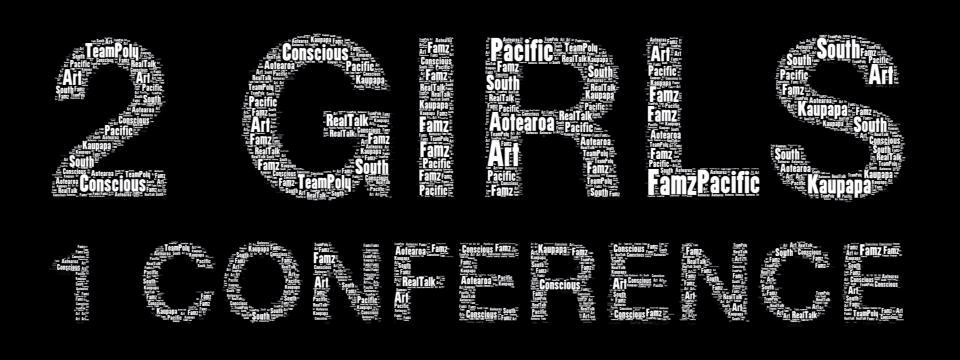
2 GIRLS 1 CONFERENCE is the name a fundraising campaign to support Leilani Kake and I to travel to Vancouver, Canada to present papers at the Pacific Arts Association (PAA) 11th International Symposium.

The theme of the event is, Pacific Intersections and cross currents: uncharted histories and future trends. The PAA regards their gatherings as opportunities for contemporary artists, cultural leaders, historians, museum and gallery curators, researchers, and collectors to engage in lively and creative dialogue in the spirit of true enquiry.

We have presented before with the PAA, and in 2010 travelled to Rarotonga, Cook Islands to participate in the 10th International Symposium. This year Leilani has proposed to discuss her video installation practice in the context of recent research into intercultural identities. I’ve been invited to contribute to a panel entitled, “Curating Pacific Spaces: The New School of Contemporary Pacific Art from New Zealand”.

Having collaborated on international travel, lecture tours, exhibitions and events since 2004, we have built our *award-winning* art practices on strong networking, bold advocacy, a genuine sense of service to our communities and lots of love, sweat and tears! In the past we have attracted support from a wide range of organisations for our collaborative endeavours, but this year we have both returned to full-time tertiary study and arts-related funding for various reasons has been out of reach.

Therefore, we’re fundraising with all our energies to get to Canada and proudly represent our communities. Funds raised will support airfares and accommodation. We have three fundraising initiatives:

  • A campaign on New Zealand’s premier crowdfunding platform, PledgeMe
  • A pretty amazing art auction featuring work by some excellent artists who all lovingly support our cause
  • A limited edition art t-shirt created in collaboration with Tepora Malo, a promising young artist studying to complete a Bachelor of Creative Arts at Manukau Institute of Technology’s Faculty of Creative Arts in Otara, South Auckland

2 GIRLS 1 CONFERENCE is our all or nothing effort to get Pacific art and South Auckland on the PAA radar.

The campaign goes live on Sunday 26 May – a heartfelt acknowledgment of Fresh Gallery Otara’s 7th anniversary, a timeframe that had been historically marked with poignant locally inspired exhibitions, hearty celebration and the opening of the annual Pacific Arts Summit (between 2010-2012)… until this year. Leilani and I want to recognise the humble beginnings of this important South Auckland arts hub with a reminder of the original kaupapa – to generate awareness and engagement with South Auckland’s unique cultural landscape.

On Sunday 26 May, our PledgeMe campaign goes *live* and our efforts to hustle and share to the best of our abilities will go into overdrive!

Whilst we are two individuals travelling to one conference, we represent a community of hard-working artists and the massive interconnected network of Pacific people who sustain and inform them. Our participation is about representing our collectives, making South Auckland visible and engaging new audiences with our vibrant and unique arts and culture.

I designed this tattoo with a friend and fellow creative, Margaret Aull – she had it tattooed to mark 100 nights after her late grandmother passed away. It was a massively rewarding process of collaboration to develop this design but has challenged my thinking around cultural purism, motifs and mana.


In Aotearoa, there are quite well-defined protocols around Maori tattoo; language and imagery for tattoo worn by Maori, and those worn by others. Within the context of [post]-colonial cultural renaissance, tattoo perhaps has heightened meaning; ownership, intellectual property, belief systems and political affiliations are all part of the social baggage of wearing culturally specific tattoo. It’s a bit different in the Pacific…

Margaret wanted to design something to reflect her Fijian heritage which she traces through her father; his mother, Margaret’s late grandmother, was a significant portal to Fiji for Margaret and her passing inspired reflection and a desire to pay homage to her Fijian ancestry.

Masi (Fijian bark cloth) motifs were the starting point for this design. I sketched a wide range of motifs and also researched how contemporary Fijian tattooists interpret masi motifs into contemporary compositions. I read about the bold stylistic characteristics of masi from various parts of Fiji, and began to feel that direct references to the motifs would discredit the meaning and mana of the tattoo I wanted to create because my practice, and Margaret’s whakapapa do not necessarily relate to the people and places where these motifs have originated.

I knew the design would be a composition of abstract references – literal, symbolic and simplified.

I wanted to relate to Margaret’s role in her family, the eldest grandchild. I wanted to honour the matriarchal role of her late grandmother, the migration and relocation of her family as well as her mixed ancestry.

I’ve referenced the form of the Fijian war canoe navigational mast head (domodomo). It is bold and black; it felt like an important thing for Margaret to see in her daily life – a symbol of navigating your way forward, knowing you can always go ‘home’, knowing that navigation takes leadership and strength of conviction. I had always loved the way the mast head has been stylised in Fijian contemporary commercial design. The one I drew was a stylised interpretation.

I thought about the ‘V’ form which is evident in early colonial illustrations of Fijian women’s tattoos. Only Fijian women were tattooed, not men; here, the ‘V’ form is a distinctly feminine reference. The form is composed of smaller stylised ‘V’ forms which are also like the shape of the sail on a Fijian canoe. The ‘V’ itself is not dissimilar to the formation in which large masses of birds fly, and is also a warring / combat formation. In this design, it is foundational, i.e. it roots the form.

Connecting the mast head and the ‘V’ is a series of visual references to Fijian masi design elements – the triangle, cross, seru form and chevron. Their composition is similar to the way in which motifs are stenciled on the border of a masi kesa. Perhaps in a subtle way, this is my effort to bring that which dwells in the margins, into the centre. A personal take on the marginalisation of the mixed race / diaspora / language-less sectors of Fijian society who are by no fault of their own, culturally marginalised.


I wear one tattoo inspired by traditional Fijian tattoo design, but the rest of my tattoos are very contemporary ways to acknowledge my Fijian heritage. I spoke about Fijian tattooing briefly in a recent interview on Radio 531pi’s Fijian language show, Na Domo i Viti e Aotearoa hosted by Nemai Vucago. I’m interested in the increased visibility of contemporary Fijian tattoo and massive popularity of Fiji-based tattooist, Tony Qumi’s Facebook community.

Collaborating on Margaret’s new tattoo was an awesome experience, seeing its application and considering the weightiness of being part of this process has been inspiring and humbling.

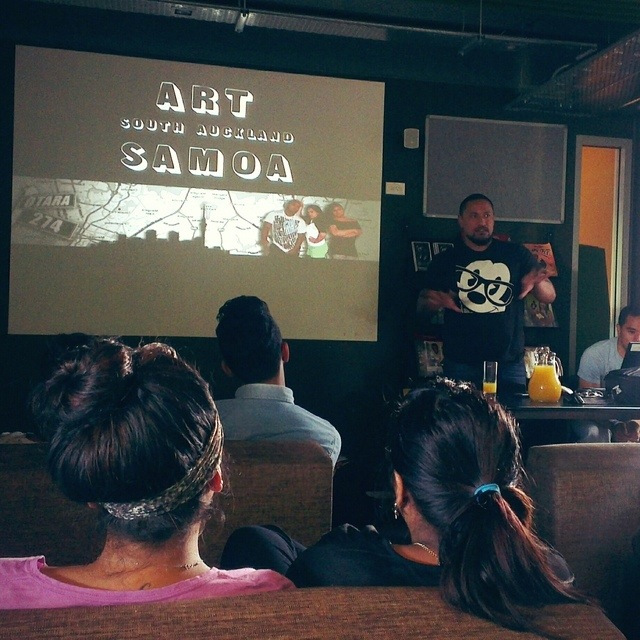
My regular Cultural Ambassador update on Radio New Zealand Nights this month was a discussion on the experience of teaching a paper called Pacific Art Histories: An Eccentric View at Manukau Institute of Technology in Otara, South Auckland. I also discussed my perceptions of the new Fresh Gallery Otara look and its place in the Otara Town Centre.

Nights on Radio New Zealand (3 April 2013)[audio http://podcast.radionz.co.nz/ngts/ngts-20130403-2038-arts_-_pasifika-00.ogg ]

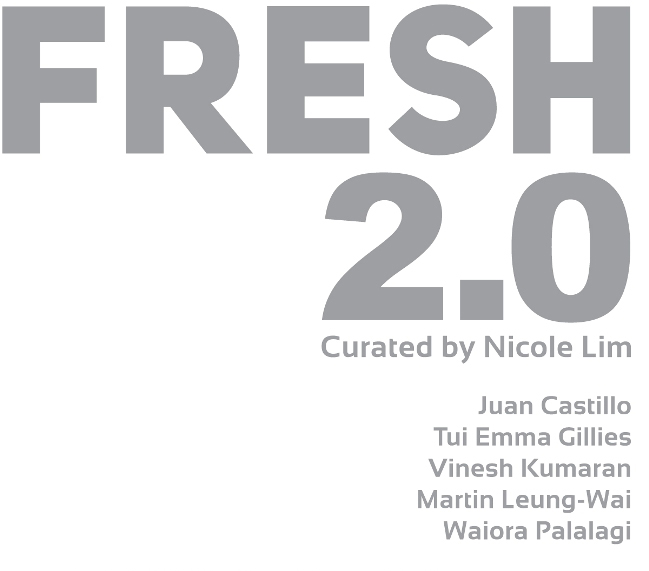
Fresh 2.0

Fresh Gallery Otara was established in May 2006 by Manukau City Council in partnership with the Otara community in South Auckland. As the manager and driver of Fresh, I produced 66 exhibitions from 2006-2012; I invested my blood, sweat and tears into the Gallery and loved my job but in June 2012, I left the role. The then Curatorial / Gallery Assistant, Nicole Lim took the reigns and has overseen the Gallery’s recent refurbishment and significant expansion.

This week, Fresh Gallery Otara re-opens as a new space under new leadership. I have unwavering support and loyalty to Nicole Lim and I can’t wait to see her first show in the new space.

Juan Castillo is a Chilean artist who produced a multifaceted work called Minimal-Baroque in 2006 as part of his residency at what was then Manukau School of Visual Arts. He collaborated with Otara artist, Leilani Kake to film a series of vox pops at Fresh Gallery Otara, asking members of the community and visitors to Fresh, “What is Art?”

The video is a historical and fascinating insight into community perceptions of the word ‘art’ – I’m so glad Nicole has chosen to re-show it.

Francis Falaniko, photographed by Vinesh KumaranVinesh Kumaran is a long-time collaborator and his input into Fresh Gallery Otara, SOUTH publication and the Pacific Arts Summits has been significant. His excellent series shot for the exhibition South Style (2009) is being re-shown and like Minimal-Baroque, exists as a historical record of South Auckland social history.

Fresh 2.0 is an exhibition that recognises the legacy of Fresh Gallery Otara, its significant relationships with Manukau Institute of Technology’s Faculty of Creative Arts (previously known as Manukau School of Visual Arts) and its enormous potential as a hub for creativity in the heart of grassroots South Auckland.

Great job, Nicole and go well, Fresh!

Source: http://www.flickr.com/people/Serentonin

South Auckland new media artist Tanu Gago is giving an artist talk at 1.30pm, Friday 22 March at Te Matariki Clendon Library, Manurewa, South Auckland.

He will be discussing his recent work and interests in the representation of Samoan masculinity. Tanu is a trained film maker who has been making gallery-based video and photography work since 2009. Since his first solo exhibition, YOU LOVE MY FRESH (2010), he has gone on to show at City Gallery Wellington, Fresh Gallery Otara, Auckland Art Gallery and the Harris Gallery at the University of La Verne, California. His 2011 series, Jerry the Fa’afafine is on permanent display at Mangere Art Centre – Ngā Tohu o Uenuku in South Auckland.

“Leo”, Jerry the Fa’afafine series (2010) by Tanu Gago with Vinesh Kumaran

I’m excited to see Tanu speaking about his work within a South Auckland context; I’m taking a group of students from MIT Faculty of Creative Arts and we’re all relieved we don’t have to go to Auckland for what promises to be a grounded and engaging discussion relevant to Pacific people and South Auckland.

I ❤ Entrepreneurial Pacific Artists

In the past two months I’ve come across a range of art products produced by entrepreneurial Pacific artists – something I love to see! Imagine if entrepreneurship and small business skills were taught at art schools! I love supporting artists who have a head for money-making!

Magnets, bags, lavalava and t-shirts… here is a small selection of some Pacific creative practitioners hustling in Auckland today!

FAF SWAG

FAF SWAG is an online LGBT community honouring Samoan fa’afafine identity. FAF SWAG t-shirts and lavalava are designed by Samoan new media artist, Tanu Gago.

Tabana by Design

Tabana by Design is a collaboration between Martine Stowers and her father. They have collectively produced a range of homeware, totes and make-up bags. They are GORGEOUS!

The Good, The Bad

The Good, The Bad is the brand of Samoan artist Gary Silipa. I’ve been a fan of his work for a while and love his TGTB Symbol t-shirt.

Tepora Malo

Tepora Malo is currently completing a Bachelor of Creative Arts at Manukau Institute of Technology. In 2012, she printed a series of lavalava and sold them at Otara Market. I came across them and loved them straight away! She now stocks Mangere Arts Centre shop located at the corner of Bader Drive and Orly Ave, Mangere, South Auckland.

Magnets by Molly Rangiwai McHale

Molly Rangiwai McHale produced a series of magnets featuring illustrations for Auckland’s recent Big Gay Out festival.

_MG_1505

Fijian-Mãori artist Margaret Aull’s solo exhibition, Concealed Ancestors ends this Saturday 23 February at Papakura Art Gallery, South Auckland. A massively well-received exhibition, only three of the nine works on paper are unsold.

During the exhibition, Margaret presented an excellent artist talk on Saturday 9 February, and also managed to present some impressive new work in her end of year assessment exhibition at Whitecliffe College of Arts & Design where she is currently studying to complete a Master of Fine Arts.


Well done, Margaret!

It was a pleasure to work on this project alongside co-curator Nigel Borell. Margaret is a super organised and professional artist; helping her deliver this beautiful solo show was a joy!