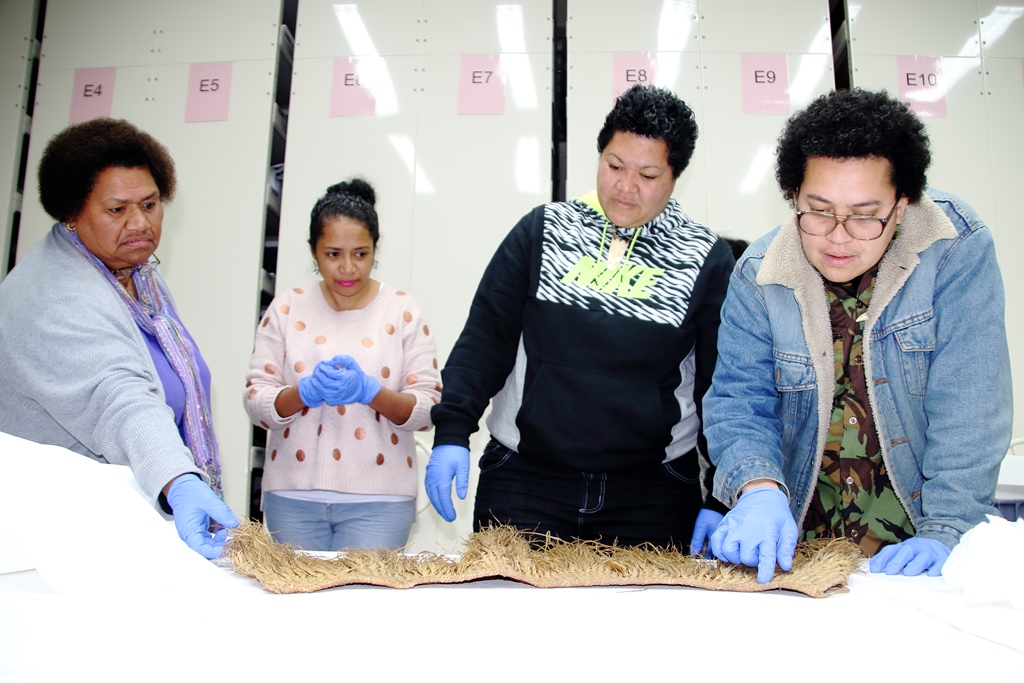
Visiting Auckland Museum store room, photograph by Sangeeta Singh11 September, 2015 – Suva, FIJI – Four Fijian New Zealand and Australian based women artists will congregate in Suva, Fiji next week for a creative research project inspired by the practice of Fijian female tattooing. This is the first time a research project is being undertaken to delve into the lost tradition of Fijian female tattooing of veiqia.

The Veiqia Project has gathered seven contemporary Fijian women artists engaged in Australia and New Zealand to participate in shared research activities and Museum visits to inform the development of new artwork for an exhibition due to take place in Auckland, New Zealand in March 2016. At its heart, The Veiqia Project involves nine Fijian women – seven artists and two curators – on a journey of artistic and cultural enquiry.

Four of the seven artists will travel to Suva from the 14th to 28th September to undertake research, meetings and participate in events.

New Zealand-based artists Margaret Aull, Joana Monolagi and Luisa Tora will join Australian-based Dulcie Stewart on the trip. Project and exhibition curators Tarisi Vunidilo and Ema Tavola, both proud i-taukei women from the province of Kadavu are excited about the prospects of their research in Fiji.

Through a shared online research forum and time spent with Fijian collections at museums in Australia, Fiji and New Zealand, the artists have generated an indigenous research archive driven by personal, artistic and relational connections. The project has drawn significant support from Auckland Museum, Fiji Museum, the Fijian Art Project, practitioners, supporters, friends and family engaged both on and offline.

“Fijian women used to have a very proud ancient tradition of veiqia, where girl children were tattooed when they reached puberty. This tradition has been lost over time due to colonization and other factors. Veiqia has intrigued many of us for a long time and we are very excited to come back home to Fiji to research more about this ancient art and to discuss and share with other Fijians their views and stories about this once practiced art”, Ms. Tavola said.

“We are grateful to Creative New Zealand for significant funding towards this research enabling us to bring our Fijian women artists together to collaborate on this project”, she added.

“We are inviting everyone to come to our organised events to share with us in story- telling and talanoa about our traditions and research that we hope one day will be revived. Come and take ownership of discussions surrounding this ancient female artform”, she said.

The artists will hold a Veiqia panel discussion at the FNU campus on Thursday, 17th September and an open day on Saturday, 19th September at the Fiji Museum Veranda and will include visitations to artists at Tagimoucia Gallery, Fiji Corrections Unit, Suva and dialogue with Fijian tattooist Billy Blaze.

Please see below for more details on the exhibition, visit https://pimpiknows.com/theveiqiaproject/ or contact Tarisi Vunidilo 7517241 for more information.

The Veiqia Project: Panel Discussion

Hear from the curators and artists behind a creative project that connects artists, Museum collections and Fijian tattoo.
Speakers: Margaret Aull, Joana Monolagi, Dulcie Stewart, Ema Tavola, Luisa Tora, Tarisi Vunidilo with guest speaker Julia Maga’au Gray

Date: Thursday 17 September, 2015
Time: 6 – 8pm
Venue: FNU Campus Raiwai, Carpenter Street
Enquiries: Theresa Koroi, ph: 9987150, email: Theresa.Koroi@fnu.ac.fj

The Veiqia Project: Investigating our tattooed histories

Come and learn about the research The Veiqia Project has uncovered, watch Melanesian tatu artist Julia Mage’au Gray demonstrate traditional hand-poke tattoo style, get involved with fun art activities, hear from The Veiqia Project artists and the ways Museum collections can inspire new understandings of our Pacific art histories.

Date: Saturday 19 September, 2015
Time: 10am – 3pm
Venue: Fiji Museum Veranda

Image credit: Sangeeta Singh, with permission from Auckland Museum
2 Comments

It’s the last few days of the PIMPI Winter Series, an experimental series of pop-up exhibitions produced in partnership with Big Willie Legacy Barber & Tattoo Studio on Auckland’s Mt Eden Road. The last day of the current show is THIS Saturday 12 September there are six works left for sale, check them out…

Southernplayalisticadillacmuzik | Noodles
420 x 594mm, Colour Accent Print on 200gsm Fuji Film Satin Finish paper (Edition of 2)

$450 [Framed]
Waiora Palalagi

… for the paper (2015)
610 x 910mm, oil on canvas
$780
Niutuiatua Lemalu

stella fella’ | is there dirt beneath the dirt?
Both 550 x 760mm, oil on canvas
$650
Niutuiatua Lemalu

MALE – Maori or Polynesian (2015)
915 x 760 x 25mm, lenticular print (Edition of 1)
$1950
Leilani Kake

** All prices in New Zealand dollars, payment via cash, bank deposit or PayPal only.
** Artwork available for collection 4pm, Saturday 12 September.

Artwork enquiries

← Back

Thank you for your response. ✨

Warning
Warning
Warning
Warning

Warning.

I love painting, and I love collecting paintings. Niutuiatua Lemalu’s works in my personal collection give me life everyday, and often scare visiting children, but I love them a lot. Know what I mean, jellybean? is the final show in the inaugural PIMPI Winter Series and the exhibition’s themes inspired the South Auckland-based painter to make three brand new oil paintings…

Niu! It has been a while! You had a solo painting exhibition at Fresh Gallery Otara almost exactly five years ago – what have you been up to?

Yeah it’s scary to think that exactly five years ago Alias was opening, must be a sign. I’ve been mostly working. I seriously considered making a go at having another show but decided to put those on hold, primarily for economic reasons. The struggle is real.

Your Alias (2010) body of work investigated masking and the layers that make up identity, the acts of revealing, hiding, being exposed. The premise of Know what I mean, jellybean? for the PIMPI Winter Series, made me think of you straight away; I’m so happy that you’ve been inspired to make three beautiful new paintings. Tell me about them!

Yes and thanks Ema for this opportunity, I was very excited when you approached me about the show particularly because I felt like “Know what I mean jellybean?” struck a personal chord. I mean, that phrase for one has probably popped up in a LOT of conversations so to me it offered a possibility of discourse, a starting and departure point; about gangs, fitting in, not quite fitting in, nostalgia, popular culture, success, failure, youth, marginalisation, politics, the ghetto, religion, family etc… Talking about my recent works is kind of difficult mainly because my first instinct is to rely on memory to describe the experience of making these works and also because painting has a way of flipping the script on you. Looking at them as they are now there’s somewhat of a departure from the original thoughts I had when I initially found out about the exhibition.

Initially I’d find some images that were direct and in your face. But there’s a kind of absurdity that goes hand in hand with trying to make painting go along with an idea. I mean the material is so crass and dumb and then it always becomes like a physical thing to make a painting submit to an idea – it refuses to lie down or be invisible and in the end no matter how fast your ideas are or even if you’re painting from an image and you don’t have to worry about something basic like, composition you still find yourself watching and waiting. So yeah, there’s some frustration in there, failure, a little bit of awkwardness and humour or not quite fitting in, a kind of longing to find the zeitgeist and not quite attaining it.

This exhibition is an attempt to visualise the interface and negotiation of difference in the spaces between cultures, class, gender. Your work is in excellent company alongside new and recent work by Leilani Kake, Waiora Palalagi and Pati Solomona Tyrell. I’ve worked with you in a traditional gallery context, deeply embedded South Auckland kaupapa; what did you think when I pitched the idea of being part of a Pacific art exhibition in a barber and tattoo studio in Mt Eden, central Auckland?

My first thought was “cool”, besides I don’t know of many people who wake up and think “hhhmmmm, I think I’ll go visit my local gallery today” and I’m an artist! Barber shops/tattoo studios on the other hand…… Seriously though, I like the idea that this could potentially be a lot more accessible to the public. I know that art galleries and museums are always heading this way too but I’ve always felt that they targeted a specific audience and the pre- requisites to enter a gallery would be a degree in art history or something! By the way this is not necessarily how it is everywhere, just a personal observation.

You’ve got mad skills, and I remember your family taking the opportunity at your artist talk at Fresh to call you out on the paintings they wanted you to give to them!! I loved that! I’m interested in the prolific practice of banner painting, key making and memorial t-shirt design; a creative economy which happens every day in the Pacific community. To me, this is contemporary Pacific art in practice; art that speaks to Pacific people, values lived experience, love, family, history. I know you’ve done your fair share of banners; what’s your views on banners, on painting for exhibitions, and the difference in audience and value, meaning and purpose?

I know my family’s pretty hardcore when it comes to supporting anyone in the family. Speaking of family my mum and dad would volunteer me to do banners towards the end of high school for church and other family members. I’d been painting since 5th form so I guess they had to find out whether I was any good or not (LOL). Banners feel like what I would imagine doing a commissioned piece would be like, only with probably a lot less creative freedom, give or take. Doing banners can be physically exhausting because of the sheer size of some and also because you’re having to negotiate around time constraints, skill limitations, whether or not the people you’re doing it for have a clear idea of what they want. Most times it’s; here’s the theme, here’s the materials and away you go. On very rare occasions you get someone who is very specific, like my aunty; which is good because someone else is calling the shots and making the decisions so it’s easier. You instantly know whether it’s a success or not based on whether someone likes it, or not. Most times the target audience are just hella grateful. I don’t think there’s ever been a time I’ve received a bad comment or where my banners have been received poorly, even in instances where I am not too happy about the end product or where I felt that I could have done better but there’s a perceived priceless exchange, almost sentimental to whoever you’re doing it for.

Painting outside of this is a lot more anxious, no one really knows what’s good. I mean painting has so much baggage, it’s been pronounced dead and revived so many times, yet people are still finding stuff to do. Maybe I chose to paint because of this possibility of resistance.

Know what I mean, jellybean?
27 August – 12 September
Featuring Leilani Kake, Niutuiatua Lemalu, Waiora Palalagi, Pati Solomona Tyrell

Big Willie Legacy Barber & Tattoo Studio is located at 159 Mt Eden Road, Mt Eden, Auckland. Open Mondays from 9am-6pm, Tuesday-Saturday from 9am-7pm. Barber and tattoo appointments and enquiries: / bigwillie.barber.tattoo.studio@gmail.com

Exhibition and Artwork Enquiries

← Back

Thank you for your response. ✨

Warning
Warning
Warning
Warning

Warning.

Writing media releases is not a strength of mine. I’ve had the privilege of working with some excellent marketing heads in the past; they’ve taken my words and created digestible, broad appeal information that gives mainstream mana to projects which generally sit comfortably within the margins.

Producing a series of exhibitions in a non-conventional, central Auckland commercial space, with an agenda of selling art and engaging broad and diverse audiences, on a minimal budget, has forced me out of my comfort zone. These exhibitions couldn’t exist ‘comfortably within the margins’; they needed to be translated, positioned, re-valued… or did they?

As the PIMPI Winter Series has rolled out, the deeper purpose and complexity of what I set out to do has revealed itself to me day by day, online and off, in conversations and silent observations. In this space between commerce and creativity, the perceived margins and the centre, where skin is marked and hair is cut, the exhibitions are encountered largely unintentionally by wandering eyes, passers by, social media followers and waiting mates, spouses and children.

Partner in the PIMPI Winter Series, and owner of Big Willie Legacy Barber & Tattoo Studio, Stan Lolohea, has challenged and invigorated my thinking at every stage. Outside of the conventions of an art gallery, who are these shows for? And does increasing the net of general awareness create more genuine interest? Does an exhibition grow the scope, care and engagement between audiences, groups… does it facilitate understanding, conversation and debate across class, race, gender divides?


I’ve found producing these exhibitions so completely refreshing, a total love-project with no funding, but built on the back of a strong forgiving partnership (vinaka vakalevu Stan), and carried by my family, who have shared the load (malo ‘aupito Taka, Si’i, Lini, Tu’i). I had found myself working from funding round to funding round, writing late night proposals, planning, pitching, failing… I needed to get back to the grassroots of what I love to do and flex my curatorial muscle.

DIY curating is a full To Do list most days, but the hosting, promo, multiple trips to Warehouse Stationary, the framers, finding excellent deals on good wine, getting my earth-thrills from using corn-based bioplastic cups… I’ve loved it all! But mostly, it has been a privilege to gently hustle these 12 talented and clever artists, facilitating sales for many of them, instigating new work and fresh thinking.

I’m grateful for the partnerships, support and online engagement that has pushed out the potential of these shows. To those who have bought work – thank you, and to those who have given their time and skills: Lana Lopesi, Ralph Brown, Sean Atavenitia for South Auckland Photography, Sangeeta Singh, Leilani Kake – I’m deeply grateful. Thanks also to the residents of Big Willie Legacy Barber & Tattoo Studio, Duss, Damian and Willy – I’ve been totally inspired watching you work!

The Private Views / Opening receptions for the PIMPI Winter Series have been too cool. Eclectic, diverse audiences… family, friends, colleagues, locals, South Aucklanders too! To those who travel from near and far to support these artists – thank you so much! It means a lot. Check out this badass video by South Auckland Photography:

//

Here’s an interview Stan and I did with Radio New Zealand reporter, Justin Gregory, aired on Friday 7 August:


And there’s still ONE MORE SHOW to go!

Please join us from 6pm on Thursday 27 August at Big Willie Legacy Barber & Tattoo Studio, 159 Mt Eden Road, central Auckland to mark the opening of Know what I mean, jellybean? featuring new and recent work by Leilani Kake, Niutuiatua Lemalu, Waiora Palalagi and Pati Solomona Tyrell – all work is for sale!

Click-Click-Follow on Instagram and Facebook for real time happenings!

Amelia (2013)
Ana Lakusa
940x1845mm
Oil on board
NZD$1200

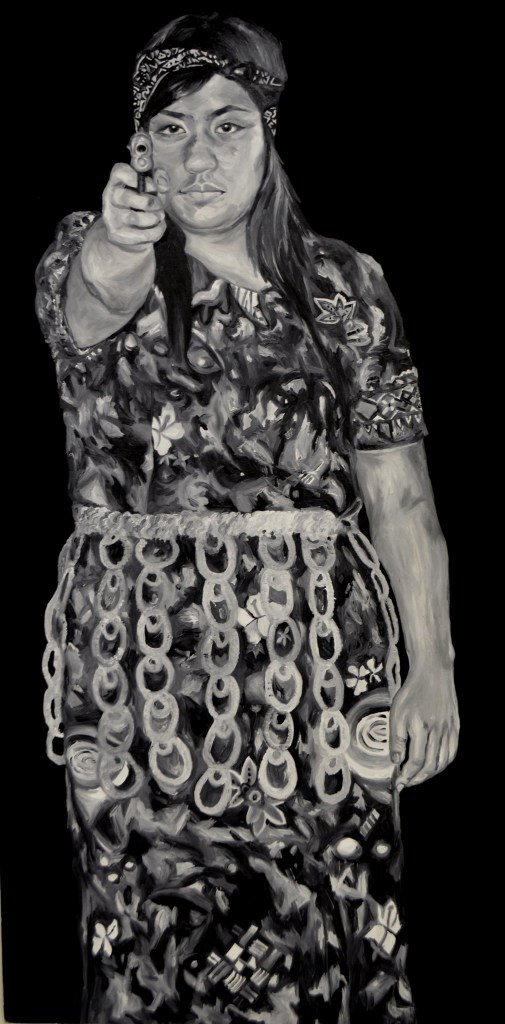
Check this work out in That’s not Pacific Art, the second of three exhibitions that make up the inaugural PIMPI Winter Series. The exhibition opens Thursday 6 August and runs until Wednesday 26 August at Big Willie Legacy Barber & Tattoo Studio, 159 Mt Eden Road, central Auckland.

This large scale oil painting is part of Ana Lakusa’s 2013 graduate series, From Heaven to Hell inspired by Ganglands, an American documentary series that profiled Polynesian gang life in Salt Lake City (USA). The works draw on the blurred lines between church, organised religion, loyalty, identity, family and gangsterism.

Exhibition and Artwork Enquiries

← Back

Thank you for your response. ✨

Warning
Warning
Warning
Warning

Warning.

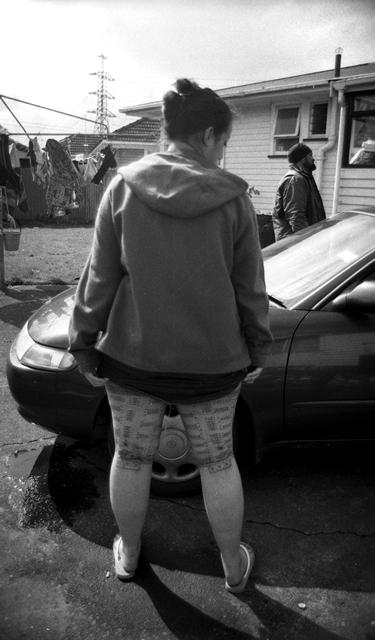
Samoa mo Samoa (2004) by Genevieve Pini

Samoa mo Samoa (2004) by Genevieve Pini, 290x195mm, edition of 3, signed inkjet prints on Hahnemühle Matt FineArt paper. Framed NZ$200 / Unframed NZ$160.

Having studied jewellery, garment construction and photography, Genevieve Pini’s interdisciplinary art practice reflects family, feminism and bloodlines between Otara and Samoa. I spoke to her briefly about her work, Samoa mo Samoa in “That’s not Pacific Art”, the second exhibition in the PIMPI Winter Series

Samoa mo Samoa is a photograph you made in 2004, what is it about and where was taken? 

Samoa mo Samoa means Samoa for Samoa, it’s the motto of the Mau Movement. Just seeing it in South Auckland made me open my eyes a bit about how we relate to our history, being where we are.

I didn’t do the tag, but I liked the politics of it… it was a good feeling seeing it on Othello shops in Otara (heart of South Auckland), I was just waiting for the bus when I saw it. It’s about claiming space, and it was up there for ages. It made me think, where is the place of our histories in our everyday life in New Zealand? It’s in the people.

“Fa’amalu” (2004) by Genevieve Pini

Otara and Samoa are significant anchors in your life and art practice, something strongly present in your work based on the process of getting your malu in 2003. I know it was a significant juncture in your life; it bonded your blood to this land, and your present (and future) to your past, Samoa to Otara. I’ve always loved how your photograph, Fa’amalu, captures the moment of excitement and intrigue before you got tattooed, how did your malu change your life and outlook?

Watching my dad going through his pe’a, the sight of seeing his blood, thinking ‘oh my god, that’s my dad, doing his thing for his family’. My dad, comes from Samoa, lives in Otara, does all this stuff for his family… working, sending money back home, keeping traditions alive.

I feel proud. And of course a certain obligation to do my part through art. I know from experience that my art doesn’t financially support my family’s Samoan fa’alavelaves and stuff but as long as I can represent them the best way I know how, I love doing art.

My malu gives me a sense of pride, knowing that my family are behind me and supporting me. When you get down to it, it represents love.

What does Samoa mo Samoa mean to you today?

It means family, love, respect… there are so many layers to this. The past, present and future, a sense of place. I have a place here…


That’s not Pacific Art
6-22 August
Featuring Faafeu Kapeneta, Ana Lakusa, Qingze Nan and Genevieve Pini.

Big Willie Legacy Barber & Tattoo Studio is located at 159 Mt Eden Road, Mt Eden, Auckland. Open Mondays from 9am-6pm, Tuesday-Saturday from 9am-7pm. Barber and tattoo appointments and enquiries: / bigwillie.barber.tattoo.studio@gmail.com

Exhibition and Artwork Enquiries

← Back

Thank you for your response. ✨

Warning
Warning
Warning
Warning

Warning.

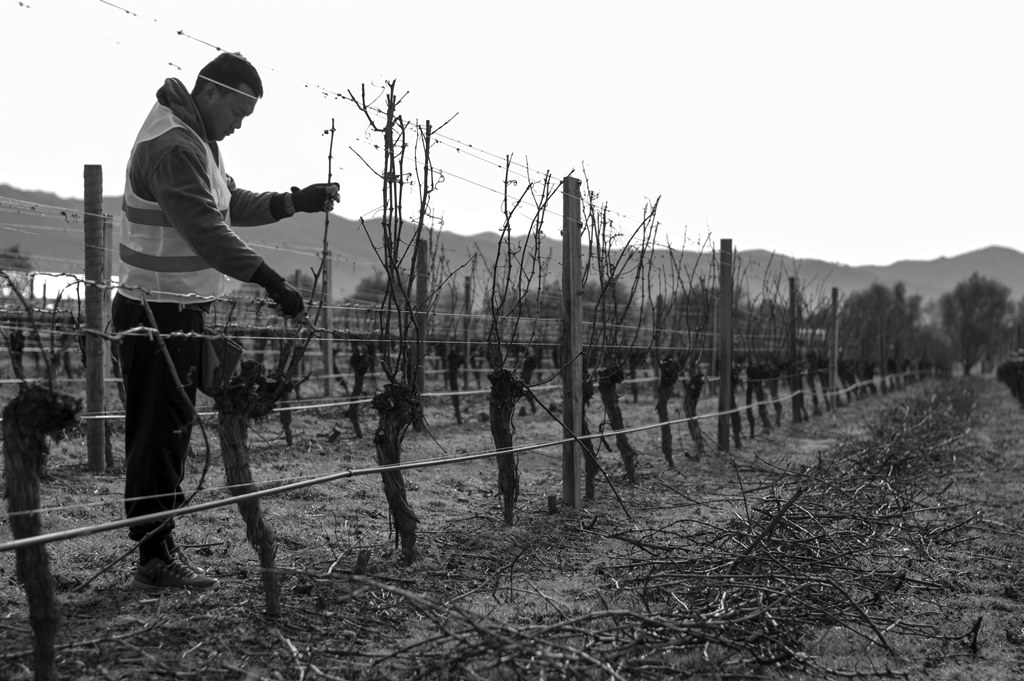
Vineyard (2015) by Faafeu Kapeneta

Faafeu Kapeneta presents three striking new photographic works in That’s not Pacific Art, the second exhibition in the PIMPI Winter Series opening Thursday 6 August at Big Willie Legacy Barber & Tattoo Studio. I asked him about that Tongan vineyard life…

Thank you for being the only South Islander in the PIMPI Winter Series! How did you end up living and working in Marlborough and how long have you been there?

Thank you Ema for the opportunity. Long story short, my family moved to Marlborough after visiting relatives for Christmas in 2005. We have been living here for nearly 10 years now after moving away from Wellington. I’ve  been here for about a year and a half now.

The Marlborough region conjures up images of quintessential New Zealand landscapes and vineyards… the stuff of tourism billboards. Whilst Otara, South Auckland is perhaps the polar opposite of that world, there’s a similarity in the work you’re making now compared to what you made whilst living here during your degree studies. What are the things you like to capture that exist in both these disparate spaces?

I like the documentary approach to photography because I want my work to be raw and honest as it can be by not distracting the frame, purely observing and recording moments that gives people a very different Marlborough, a more grounded look at people who live and work here and not just the beautiful landscapes that the region is renowned for.

I’m thinking good jobs and limited big city distractions make working in Marlborough a pretty worthwhile opportunity for a lot of Pacific Islanders. What do you see as the benefits of working and living there, and are there things you miss or long for?

The most common thing that attracts a lot of Pacific Islanders to Marlborough was and still is the vineyard business. There are other jobs here and there but we, as Pacific Islanders living in Blenheim are renowned to be working out in the vineyards. In Marlborough, being a hot spot for tourism, you’ll likely see and meet a lot foreigners who come here for labour work. One of the benefits of living in Blenheim that I realised after moving back here was how it reminded me of my village in Tonga; countryside, quiet and slow pace lifestyle as opposed to the fast pace and noisy Auckland. There are couple of things I do miss though; the takeaways, access to Pacific Island foods such as taro or cassava and the Pacific art scene.

I’m so happy that this opportunity has inspired you to make some new work, I love what it adds to this exhibition, and to the wider PIMPI Winter Series. I’m wondering, what kind of things are on your art bucket list? What would you love to shoot, where would you love to show your work, and what kind of impact would you like your work to have?

In the near future I want to document some of the groups of Pacific Island workers who come here on a 3-6 months working Visa in the vineyards. I’m starting to look at landscape photography, and I’ve met quite a few foreigners and want to do some work with them. I want document other Pacific Island communities in other towns in the South Island and would love to show that work in South Auckland because I want people to know we exist and that you can make a good living in the smaller towns in the South Island.

That’s not Pacific Art
6-22 August
Featuring Faafeu Kapeneta, Ana Lakusa, Qingze Nan and Genevieve Pini.

Big Willie Legacy Barber & Tattoo Studio is located at 159 Mt Eden Road, Mt Eden, Auckland. Open Mondays from 9am-6pm, Tuesday-Saturday from 9am-7pm. Barber and tattoo appointments and enquiries: / bigwillie.barber.tattoo.studio@gmail.com

Exhibition and Artwork Enquiries

← Back

Thank you for your response. ✨

Warning
Warning
Warning
Warning

Warning.

The PIMPI Winter Series kicked off on Thursday 16 July with the opening of U Can’t Touch This, a group show featuring new work by Talafungani Finau, Sione Monu, Siliga David Setoga and Daisy Tavilione.

The exhibition’s private view was well attended by friends, family, art peers and locals. Drinks were served by the beautiful Lini, and four of the 11 works were sold on the night. Plans to do an interesting ‘not Pacific art’ tattoo performance with ARTSPACE Director, Misal Adnan Yildiz were hatched, and stories and memories shared of Mt Eden’s interesting art history and shifting demographics. The shop was filled with talanoa and laughter, Island reggae and the buzzing of the tattoo machine – a dream opening!

I’m super grateful for the opportunity to work with Big Willie Legacy Barber & Tattoo Studio. Thank you to barber, Willy, for letting us share your space. And thank you Raymond Sagapolutele and Iokapeta Magele-Suamasi for taking beautiful shots on opening night.

U Can’t Touch This is up until Saturday 1 August, all artwork sold is available for collection from Monday 3 August. The next exhibition in the series, That’s not Pacific Art features new and recent work by Fa’afeu Kapeneta, ‘Ana Lakusa, Qingze Nan and Genevieve Pini. It opens on Thursday 6 August from 6-8pm at Big Willie Legacy Barber & Tattoo Studioall welcome!

Talafungani Finau is an Ōtāhuhu-based artist whose practice is informed and embedded in contemporary Tongan culture, custom and aesthetics. Her lei artistry pushes the boundaries of wearability, edibility and love! I asked her about inspiration and observations of new materials in Tongan koloa…

Your work Hilifaki kahoa in “U Can’t Touch This” for the PIMPI Winter Series is stunning, and smells and looks delicious! Where did you get the inspiration for this work and what materials have you used?

Aww malo Ema! The inspiration derives from my recent trip to Tongatapu thanks to my mehikitanga Sela E Finau… *coughs* high status aunty* lol, where we were able to attend the Coronation (fkmalo lahi atu Ma’ata Havea… oh wait? can we do shout outs on your blog?  hehehe). If it wasn’t for these two ladies, I wouldn’t have been able to say, “I was inside the Centenary Church for the coronation ceremony of King VI, ya’ll!”.  Which is a big deal because it was invitation only. Gangstaa riiight? haha!

The materials comprised of bias fabric tape (used as the bone structure of the lei because the chocolates are pretty heavy and without the bias tape the lei would just rip apart), gold ribbon to tie the Lindt Lindor (quality milk chocolate), and clear masking tape to hold the Ferrero Confetteria Raffaello (a crisp coconut w/ almond centre). Together it forms the silhouette of the red robe worn King Tupou VI.

You’re an experienced lei maker, how did you get into it and what is your favourite style of lei to make and gift?

Well I’m from Texas, and in the States when someone achieves a milestone, we go crazy. Graduations, sweet 16, 21st birthdays, church events, and White Sundays… we honour them all. I really got into it back when I was a student at Trinity High School (T’s UP!) where our Polynesian Club sold candy leis to raise money. And the competition is real out there ya’ll. Everyone brings out their LEI-game when it comes to graduation season too, so that’s where it started for me. My signature style of lei to make is actually the big personalised candy leis with the BEST goodies, and pretty shiny wrapper foils because I like that bling bling look lol.

I love that your work in the exhibition is perishable, and begs to be eaten! It changes the kind of presence and value of your workmanship, did you consider using non-perishable materials, or does that change the meaning and mana of the idea?

Yes, I did consider making a non-perishable lei… went out and bought the materials for it too… but for me it did change the mana. I understand leis to be perishable: floral or candy. So much hard work goes into a lei, and they can’t be preserved. So whats the point? Well… that’s what love looks like. It’s so beautiful when you give and receive one; the feelings and emotions that come with it, it’s not tangible, kind of like how a lei itself isn’t forever.

There are some interesting developments in the ways particularly Tongan artists utilise modern and readily available materials available here in New Zealand to create customary items such as lei / garlands, dance costumes and kato teu – I’m particularly taken by the innovative use of plastic grapes as the basis of the new genre of kalepi style. Are there any new styles or innovations that have captured your attention, or inspired you?

This may sound hella bias, (#halacare) but my mother is known for her kalepi leis in the States… I supply her grapes from here because she says they’re better quality than what they have available there in America. Her kalepi leis are extremely detailed it’s often mistaken as the real Tongan leis from Tonga.  Much of my talent comes from her, but my hard work ethics is definitely my dad haha!  But of all the kalepi leis I’ve seen here in NZ and overseas, hers are the best and I plan on learning that from her when I go back to Texas in November. She knows her Tongan flowers really well, how the shape or form of the Tongan kahoa looks… I’ll ask her to make you one! 😉

U Can’t Touch This
16 July – 1 August
Featuring Talafungani Finau, Sione Monu, Siliga David Setoga, Daisy Tavilione

Big Willie Legacy Barber & Tattoo Studio is located at 159 Mt Eden Road, Mt Eden, Auckland. Open Mondays from 9am-6pm, Tuesday-Saturday from 9am-7pm. Barber and tattoo appointments and enquiries: (09) 630 4380 / bigwillie.barber.tattoo.studio@gmail.com

Exhibition & Artwork Enquiries:

← Back

Thank you for your response. ✨

Warning
Warning
Warning
Warning

Warning.

This slideshow requires JavaScript.

WORKS LIST

Hilifaki kahoa (2015) SOLD
Mixed media
$50
Talafungani Finau

King George Tupou was here #1 SOLD, #2, #3 SOLD
All 2015, ink on cartridge paper, signed
$350 [Framed]

Fresh cuts (2015)
Inkjet print on Hahnemühle Matt FineArt paper
$150 [Framed]
Sione Monu

Oki fa’akama Samoa moni lou ulu / Cut your hair like a true Samoan boy (2015)
Photograph 2014, photographer Setoga Setoga II
Edition of 5
Inkjet print on Hahnemühle Matt FineArt paper
$3000 [Framed]

Shaving (2013)
Edition of 5
Inkjet print on Hahnemühle Matt FineArt paper
$1200 [Unframed]
Siliga David Setoga

Green Flava in Ya Ear SOLD
Pink Supa Dupa Fly
Orange Shook Onez
Yellow Rebirth of Slick

All 2015, ink on Fabriano Artistico 100% cotton, acid-free paper
$200 each [Framed]
Daisy Tavilione

U Can’t Touch This
Curated by Ema Tavola for Big Willie Legacy Barber & Tattoo Studio
16 July – 1 August 2015

Artwork enquiries
Ema Tavola (Curator) | Email pimpi@pimpiknows.com | Mobile 027 5779369 | Web www.PIMPIknows.com