Posts from the ‘Exhibitions’ category

The drawings in this series are six meditations on the creeping gentrification that is increasingly changing the cultural landscape of South Auckland.

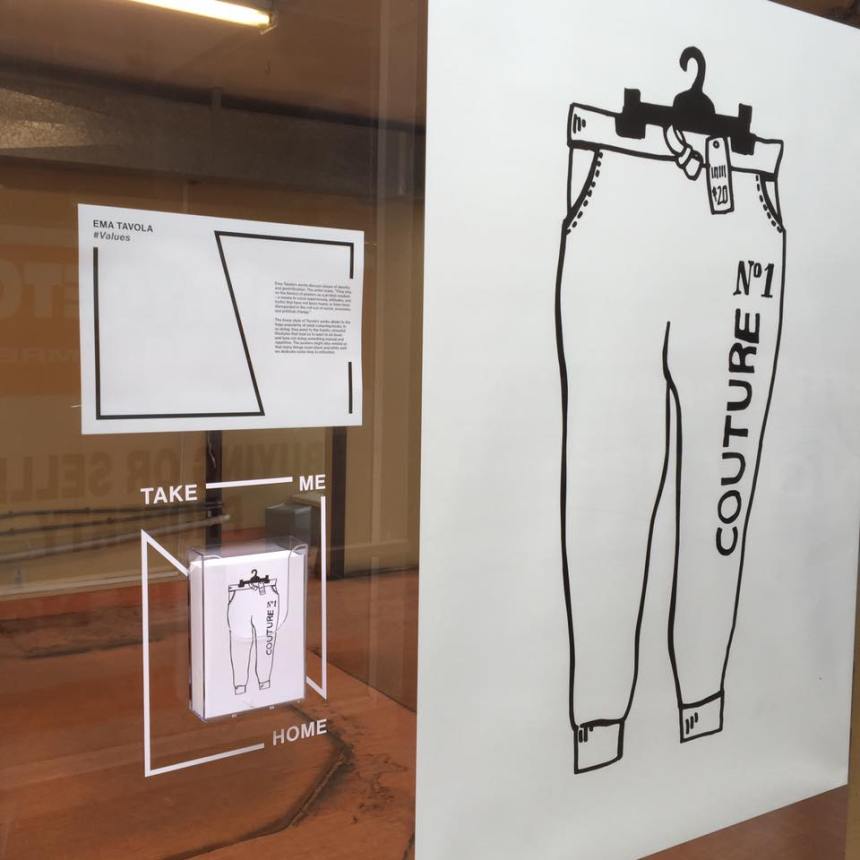
I made these works for a pop-up / pocket exhibition project taking place currently in Old Papatoetoe,South Auckland. Organised by The Pantograph Punch and commissioned by Auckland Council, the exhibition takes the form of large format posters in vacant shop windows in the soon to be ‘renewed’ Old Papatoetoe mall.


Sm VALUES (1)In her 2014 TEDxNewYork talk, Dr Stacey Sutton discusses gentrification as a manifestation of inequality. She challenges common misconceptions about gentrification and unpacks the politics of displacement. Although speaking to American contexts, so many of these issues are applicable to the South Auckland situation.

Sm VALUES (6)

The site of the exhibition is the shop windows of empty shops in the Old Papatoetoe mall. So many of the vacant shops had hand-written signs in the window, some directing customers to a new address, others just simply declaring the end of their company’s presence in Papatoetoe. I was interested in the time, effort and emotion it took  to write such an important message, and the tensions of change and takeovers.

Sm VALUES (2)

13700135_1664939870495713_2371007236765785056_n


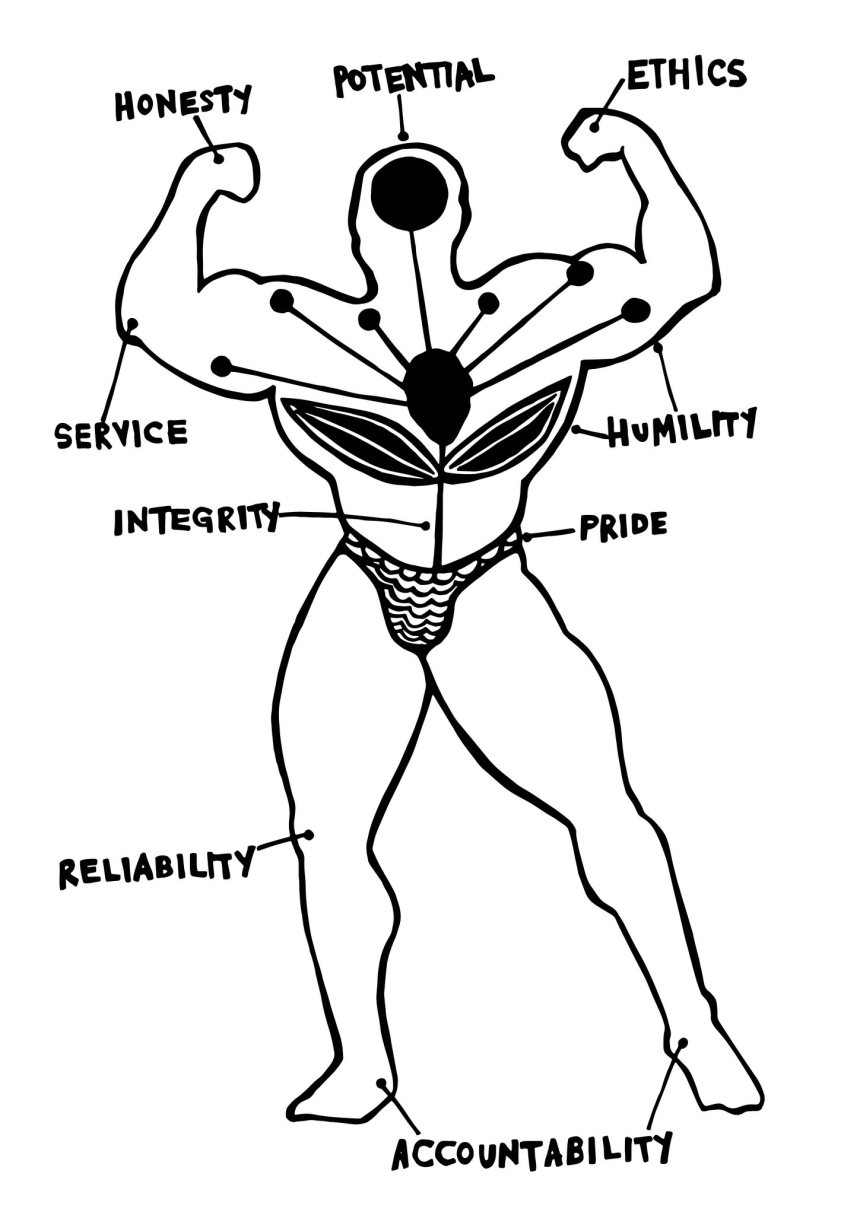
After various recent experiences of the Auckland Council Arts and Culture team, I’ve reflected on the values that could or should underpin arts service delivery and effectiveness from my position as a local artist. The bureaucracy protects and connects, flexing a vision of strength.

Sm VALUES (3)

Old Papatoetoe mall is getting ‘renewed’, Ōtāhuhu is getting a brand new transport depot, Manukau Train Station now brings people to the heart of Southside. Train stations bring all the bucks to the yard, too bad if you don’t live near one.

Check out Postcards from Papatoetoe, a ‘pop-up & pocket exhibition’ organised by The Pantograph Punch in the Old Papatoetoe Mall, St George Street, South Auckland. The exhibition features work by Elisabeth Alani, Quishile Charan and Pooja Subramanian, Liyen Chong, Vinesh Kumaran, Kerry Ann Lee, Lana Lopesi, and Ema Tavola.

Photo credit: Francis McWhannell, The Pantograph Punch

I was invited by Ioana Gordon-Smith and Lana Lopesi to write one of five feature articles on the subject of community art for Localise, a temporary newspaper publication that accompanied this year’s Whau Arts Festival. Check it out…

When stars align

The idea of community arts is a loaded, emotional topic for me; my position is muddied by several competing tensions.

Being a Pacific Islander, in diaspora, being a marginalised ethnic(mixed race)-other in the context of dominant culture.

Being a former public servant and messy restructure refugee in post-Global Financial Crisis, National Party-led New Zealand.

Being over-qualified and under-employed.

Being poor.

Being privileged.

Having the agency to be outspoken about all of the above.

But mostly, being an artist based in the Ōtara-Papatoetoe area of Manukau/South Auckland, where I’ve lived for most of my adult life.

I’ve been a vocal critic of the ways ‘arts and culture’ are delivered as public service in my city in recent years. From public art decisions to cronyism and questionable curating, I’ve come to think that in between my ideas of best practice and what “aspirational”[i] programming looks like to the powers that be, there is a galaxy of disengaged stars and black holes of cosmic confusion.

On my planet, aspirational community arts programming is about people first, art second. It’s part grassroots, part global, part digital, part old school. It’s all ages, all the time. It’s holistic and healing. From my lived experience on this far-flung planet, worlds away from Auckland’s Queen Street, the arts are people-centric, voice-enabling, capacity building.

If a community arts centre was to reflect my aspirations, the power and potential of local artists would be harnessed and honed, supported and celebrated. You could spend hours at my aspirational art centre; meeting people, laughing, being moved, playing, thinking. As an artist, you would feel empowered knowing your contribution to the world is valid, and you’re part of a global community who reflect and respond to their lives and environments through creative languages.

This aspirational community arts centre would prioritise those who are local to the area in which it sits. It would have a firm grasp of the histories of its space and residents, and the experiences of those who live, work, shop… struggle and thrive within its shared environment. It would be sensitive towards vulnerable groups, and understand and promote the potential of art to heal, engage, open minds and affect change. Through this knowing, it would be able to offer profound and grounded experiences to visitors from beyond the area, who are afforded an insight into a unique community, as represented through its arts and people.

Exhibitions at this aspirational arts centre would be diverse and exciting; every single one designed with the audience in mind – children, tourists, old people, young people, critics… mums, dads, cynics, bureaucrats. Exhibitions wouldn’t please everyone all the time, but clever interpretive texts, bold and innovative public programming and user-friendly curating would help break down perceptions of artistic elitism. Exhibitions would be programmed by a committee of strategic, brainy, community-minded individuals, 75% of whom would be local residents to capture the vested interest that only locals can impart on decision making that affects their own community.

Exhibition proposals would be welcomed all year long, and this community arts centre would host free exhibition planning workshops and curatorial skills seminars, because the community would be seen as an immense creative resource, not a threat to curatorial egos. Artists, curators, marketers, film makers, project managers, musicians, brokers and advisors would be invited to monthly networking hui with inspiring speakers, arty speed dating and locally sourced catering.

Exhibiting artists would spend time in this community of mine, understanding, talking, responding to the site their work would sit within. Their exchanges would be respectful and reciprocal. Meaningful engagement with local people and groups would be the primary measure of success in this aspirational arts centre, not incentivised surveys taken at exhibition openings, or reviews in mainstream media.

This aspirational arts centre would constantly question its own practice, and listen, all the time. It would draw on the knowledge and insights of audiences to understand what works and what doesn’t, call on artists to inform its creative services, consult with businesses and NGOs to develop collaborative projects and partnerships. As an evolving space, change would be exciting and considered, not threatening and personal.

As a space activated by people, it would be proud to provide areas for gathering, for sitting and talking, for breastfeeding, singing softly to babies, for calming toddlers. Spaces for raucousness, for reading, spaces for privacy.

And there would be coffee… the best coffee in town! The kind that people would drive for, that makes the heart beat faster, and it would be good, really good, every time. The café owners would be happy because this aspirational arts centre would attract diverse audiences every day. Excellent WiFi, comfortable seating and lots of plants and natural light would make this the freshest spot in town and people would come back again, and again.

My aspirational community arts centre would be integrated fully and purposefully into its natural, social, cultural and economic landscape. It would host meetings, training sessions, pop-up art sales, poetry, performances, workshops, product and book launches. It would respond to the needs and interests of its community and be transparent about its agendas. Good governance and effective leadership would be practiced, encouraged and promoted. The centre’s internships would be so well designed that it would become a turbine for community arts leaders, enablers, movers and shakers.

Artists would be on waiting lists to be part of the rich and vital professional development programme this arts centre would offer! In workshops and seminars, projects and publications, artists would have the opportunity to learn about pricing and selling their work, diversifying and monetising a creative practice, writing artist statements, proposals, bio notes, starting blogs, taking good photos, project management and communication skills, marketing, branding, budgeting, funding…

In my community, the economic potential of creativity is rarely demonstrated; the creative industries are hard to quantify when most artists people know are teachers / WINZ case managers / administrators / call centre operators / video shop clerks / road workers… or on the dole. My aspirational arts centre would understand this reality.

Exhibitions and events are great, but education pathways and tangible opportunities, role models and success stories are necessary to make the creative industries visible, tangible and accessible.

Here, the WORD art is unpacked, redefined, owned / disowned. Art is inextricable from people; it is embedded in culture, intuitive and empowering, a gift and a privilege. My aspirational art centre would discredit the common perception that Pacific youth somehow have disproportionate talent in the creative arts, because the potential of Pacific youth is limitless, in any field.

And everything this aspirational arts centre would deliver would be underpinned by an acute understanding of service, audience and accountability.

Back in reality, my local community arts centres are still galactically dislocated from my expectations and aspirations, which are grounded in 15 years of living, breathing, loving, teaching, hyping up, blogging, picking up, framing, hanging, installing, advocating, hosting, buying, selling… and listening to artists from my community.

I think longingly of the kind of programming, partnerships and innovation that happens in places like Studio Museum Harlem, the incredible and inspiring entrepreneurialism of local artists in Bandung, Indonesia, and the way the four-yearly Festival of Pacific Arts embraces the breadth of socially and culturally entrenched creative practices, from healing arts to tattoo, poetry to pan-pipes and literally everything in between. I think about the site specificity and casual sophistication of Footscray Arts Centre in Melbourne, and the effortless cool of the The Dowse Art Museum in Lower Hutt.

In New Zealand’s largest and most ethnically diverse urban centre, the country’s super city guinea pig, the local has become the pan-local. Territory gained in wholesale branding and global rankings of ‘liveability’, is lost ground in terms of social inclusion, meaning and mana.

How do we measure quality in the delivery and presentation of community arts / art in community spaces?

Ask, listen and take time to understand the community’s aspirations. Respond, enable, facilitate, and channel resource. Watch the stars align.

Ema Tavola
October 2015

[i] Scott, H. (23 March, 2014). Local galleries and the community. Retrieved 29 August, 2015, from http://www.radionz.co.nz/national/programmes/standing-room-only/audio/2589956/local-galleries-and-the-community

I love painting, and I love collecting paintings. Niutuiatua Lemalu’s works in my personal collection give me life everyday, and often scare visiting children, but I love them a lot. Know what I mean, jellybean? is the final show in the inaugural PIMPI Winter Series and the exhibition’s themes inspired the South Auckland-based painter to make three brand new oil paintings…

Niu! It has been a while! You had a solo painting exhibition at Fresh Gallery Otara almost exactly five years ago – what have you been up to?

Yeah it’s scary to think that exactly five years ago Alias was opening, must be a sign. I’ve been mostly working. I seriously considered making a go at having another show but decided to put those on hold, primarily for economic reasons. The struggle is real.

Your Alias (2010) body of work investigated masking and the layers that make up identity, the acts of revealing, hiding, being exposed. The premise of Know what I mean, jellybean? for the PIMPI Winter Series, made me think of you straight away; I’m so happy that you’ve been inspired to make three beautiful new paintings. Tell me about them!

Yes and thanks Ema for this opportunity, I was very excited when you approached me about the show particularly because I felt like “Know what I mean jellybean?” struck a personal chord. I mean, that phrase for one has probably popped up in a LOT of conversations so to me it offered a possibility of discourse, a starting and departure point; about gangs, fitting in, not quite fitting in, nostalgia, popular culture, success, failure, youth, marginalisation, politics, the ghetto, religion, family etc… Talking about my recent works is kind of difficult mainly because my first instinct is to rely on memory to describe the experience of making these works and also because painting has a way of flipping the script on you. Looking at them as they are now there’s somewhat of a departure from the original thoughts I had when I initially found out about the exhibition.

Initially I’d find some images that were direct and in your face. But there’s a kind of absurdity that goes hand in hand with trying to make painting go along with an idea. I mean the material is so crass and dumb and then it always becomes like a physical thing to make a painting submit to an idea – it refuses to lie down or be invisible and in the end no matter how fast your ideas are or even if you’re painting from an image and you don’t have to worry about something basic like, composition you still find yourself watching and waiting. So yeah, there’s some frustration in there, failure, a little bit of awkwardness and humour or not quite fitting in, a kind of longing to find the zeitgeist and not quite attaining it.

This exhibition is an attempt to visualise the interface and negotiation of difference in the spaces between cultures, class, gender. Your work is in excellent company alongside new and recent work by Leilani Kake, Waiora Palalagi and Pati Solomona Tyrell. I’ve worked with you in a traditional gallery context, deeply embedded South Auckland kaupapa; what did you think when I pitched the idea of being part of a Pacific art exhibition in a barber and tattoo studio in Mt Eden, central Auckland?

My first thought was “cool”, besides I don’t know of many people who wake up and think “hhhmmmm, I think I’ll go visit my local gallery today” and I’m an artist! Barber shops/tattoo studios on the other hand…… Seriously though, I like the idea that this could potentially be a lot more accessible to the public. I know that art galleries and museums are always heading this way too but I’ve always felt that they targeted a specific audience and the pre- requisites to enter a gallery would be a degree in art history or something! By the way this is not necessarily how it is everywhere, just a personal observation.

You’ve got mad skills, and I remember your family taking the opportunity at your artist talk at Fresh to call you out on the paintings they wanted you to give to them!! I loved that! I’m interested in the prolific practice of banner painting, key making and memorial t-shirt design; a creative economy which happens every day in the Pacific community. To me, this is contemporary Pacific art in practice; art that speaks to Pacific people, values lived experience, love, family, history. I know you’ve done your fair share of banners; what’s your views on banners, on painting for exhibitions, and the difference in audience and value, meaning and purpose?

I know my family’s pretty hardcore when it comes to supporting anyone in the family. Speaking of family my mum and dad would volunteer me to do banners towards the end of high school for church and other family members. I’d been painting since 5th form so I guess they had to find out whether I was any good or not (LOL). Banners feel like what I would imagine doing a commissioned piece would be like, only with probably a lot less creative freedom, give or take. Doing banners can be physically exhausting because of the sheer size of some and also because you’re having to negotiate around time constraints, skill limitations, whether or not the people you’re doing it for have a clear idea of what they want. Most times it’s; here’s the theme, here’s the materials and away you go. On very rare occasions you get someone who is very specific, like my aunty; which is good because someone else is calling the shots and making the decisions so it’s easier. You instantly know whether it’s a success or not based on whether someone likes it, or not. Most times the target audience are just hella grateful. I don’t think there’s ever been a time I’ve received a bad comment or where my banners have been received poorly, even in instances where I am not too happy about the end product or where I felt that I could have done better but there’s a perceived priceless exchange, almost sentimental to whoever you’re doing it for.

Painting outside of this is a lot more anxious, no one really knows what’s good. I mean painting has so much baggage, it’s been pronounced dead and revived so many times, yet people are still finding stuff to do. Maybe I chose to paint because of this possibility of resistance.

Know what I mean, jellybean?
27 August – 12 September
Featuring Leilani Kake, Niutuiatua Lemalu, Waiora Palalagi, Pati Solomona Tyrell

Big Willie Legacy Barber & Tattoo Studio is located at 159 Mt Eden Road, Mt Eden, Auckland. Open Mondays from 9am-6pm, Tuesday-Saturday from 9am-7pm. Barber and tattoo appointments and enquiries: / bigwillie.barber.tattoo.studio@gmail.com

Exhibition and Artwork Enquiries

Go back

Your message has been sent

Warning
Warning
Warning
Warning

Warning.

This slideshow requires JavaScript.

WORKS LIST

Hilifaki kahoa (2015) SOLD
Mixed media
$50
Talafungani Finau

King George Tupou was here #1 SOLD, #2, #3 SOLD
All 2015, ink on cartridge paper, signed
$350 [Framed]

Fresh cuts (2015)
Inkjet print on Hahnemühle Matt FineArt paper
$150 [Framed]
Sione Monu

Oki fa’akama Samoa moni lou ulu / Cut your hair like a true Samoan boy (2015)
Photograph 2014, photographer Setoga Setoga II
Edition of 5
Inkjet print on Hahnemühle Matt FineArt paper
$3000 [Framed]

Shaving (2013)
Edition of 5
Inkjet print on Hahnemühle Matt FineArt paper
$1200 [Unframed]
Siliga David Setoga

Green Flava in Ya Ear SOLD
Pink Supa Dupa Fly
Orange Shook Onez
Yellow Rebirth of Slick

All 2015, ink on Fabriano Artistico 100% cotton, acid-free paper
$200 each [Framed]
Daisy Tavilione

U Can’t Touch This
Curated by Ema Tavola for Big Willie Legacy Barber & Tattoo Studio
16 July – 1 August 2015

Artwork enquiries
Ema Tavola (Curator) | Email pimpi@pimpiknows.com | Mobile 027 5779369 | Web www.PIMPIknows.com

Media Release
9 July 2015

The head, the hair and the selfie

South Auckland curator, Ema Tavola, is bringing Pacific art to new audiences in a series of three site-specific pop-up exhibitions at a Mt Eden barber and tattoo shop.

The PIMPI Winter Series is a collaboration with Stan Lolohea, art historian, tattooist and owner of Big Willie Legacy Barber & Tattoo Studio. Three exhibitions will be shown over eight weeks featuring over 25 new works from 12 visual artists, and everything is for sale!

“We’ve joined forces to emphasise the entrepreneurial potential of Pacific art and creativity. There seem to be few opportunities for artists to show and sell experimental work, but it’s this exposure and the sales that can be generated, that can give a creative practice quite a bit of momentum,” Ema says.

The exhibitions have been developed to respond to the site and context of the barber shop, the common perceptions of what (and who) defines ‘Pacific art’, and the everyday negotiation of difference living in New Zealand’s largest and most ethnically diverse city.

The artworks will be installed in and around the busy barber shop floor, and the first exhibition of the series, U Can’t Touch This, is a special acknowledgment of the head, the hair and the selfie.

Alongside Mt Eden local, new media artist Siliga David Setoga, the show features the work of three first-time exhibitors; Talafungani Finau and Daisy Tavilione from South Auckland, and Sione Monu based in Canberra, Australia. In adornment, illustration, photography and print, each artist responds to the idea of the head, regarded in many Pacific cultures as the most sacred part of the body.

Ema believes in the quality of making art accessible and relevant, “this is artwork that doesn’t need an art gallery to define it; the work reflects everyday lives, values and shared experience. It’s current and beautiful, informed by Auckland and our place in the world.”

Meet the artists at the exhibition’s Private View events, book in for a haircut or tattoo, or just drop in for a visit. With only a four day turnaround, two more exhibitions will follow U Can’t Touch This and works lists, artist interviews, photos and commentary will be available at www.PIMPIknows.com

Exhibition details

U Can’t Touch This
Featuring: Talafungani Finau, Sione Monu, Siliga David Setoga, Daisy Tavilione
Private View: 6-8pm, Thursday 16 July
Exhibition dates: 16 July – 1 August

The next exhibitions in the PIMPI Winter Series are:

That’s not Pacific Art
Featuring: Faafeu Kapeneta, Ana Lakusa, Qingze Nan, Genevieve Pini
Private View: 6-8pm, Thursday 6 August
Exhibition dates: 6-22 August

Know what I mean, jellybean?
Featuring: Leilani Kake, Niutuiatua Lemalu, Waiora Palalagi, Pati Solomona Tyrell
Private View: 6-8pm, Thursday 27 August
Exhibition dates: 27 August – 12 September

Venue

Big Willie Legacy Barber & Tattoo Studio is located at 159 Mt Eden Road, Auckland.
Opening Hours: Monday, 9am – 6pm; Tuesday – Saturday 9am – 7pm

About Stan Lolohea

Stan Lolohea has been a practicing tattoo artist for more than 10 years working predominantly between Auckland and Melbourne. He opened Big Willie Legacy Barber & Tattoo Studio in 2014, a dedication to his late friend, Willie Halaifonua, an Auckland-based barber who suffered a fatal brain injury whilst playing rugby in 2013. Stan holds a Master of Arts degree in Art History from the University of Auckland.

About Ema Tavola

From 2006-2012, Ema Tavola held the role of Pacific Arts Coordinator for Manukau City Council (later Auckland Council), where she established and managed Fresh Gallery Otara producing over 60 exhibitions, three annual Pacific Arts Summits and co-editing two editions of SOUTH publication. In 2012, Ema was the first curator awarded the Creative New Zealand Arts Pasifika Award for Contemporary Art, the same year she contributed to the curatorial vision for Home AKL, the first major survey show of Pacific artists at Auckland Art Gallery.

Under the umbrella of PIMPI (Pacific Island Management, Production and Ideas), Ema undertakes consultancy work in project and event management, research, writing and curatorial projects. She holds a Master of Arts degree in Arts Management from AUT University.

Exhibition enquiries

Ema Tavola (Curator)
Email pimpi@pimpiknows.com | Mobile 027 5779369 | Twitter @colourmefiji | Web http://www.PIMPIknows.com

I STAND WITH YOU is a project developed by Luisa Tora, a third year Visual Arts student at Manukau Institute of Technology Faculty of Creative Arts in Otara, South Auckland.

Marking International Day Against Homophobia and Transphobia (IDAHOT), the project features 13 artworks produced as posters for display at both the Faculty of Creative Arts and in a pop-up exhibition at Fresh Gallery Otara from 12-17 May, 2014.

I’m pleased to have partnered on this important project along with the Faculty of Creative Arts, Fresh Gallery Otara and FAF SWAG. The artists involved have produced an excellent body of work; they represent students, staff, alumni and friends of the Faculty of Creative Arts, each with a unique relationship to South Auckland.

I’ll be speaking as one of seven quick-fire lunchtime artist talks on Tuesday 13 May from 12.30pm at MIT Faculty of Creative Arts, 50 Lovegrove Crescent, Otara, South Auckland – all welcome! The project’s other public event is a lunchtime panel of LGBTQI youth service providers on Thursday 15 May at 12.30pm. On the actual IDAHOT day, Saturday 17 May, artists, friends and family are invited to morning tea at Fresh Gallery Otara at 11am.

The posters are not for sale, but check out the project’s website and contact page for enquiries.

Photo by Ema Tavola

The OTARAcube is a permanent exhibition space in the Otara Town Centre; it is a 10×10 foot customised container gallery managed by Manukau Institute of Technology Faculty of Creative Arts developed with support from the Otara-Papatoetoe Local Board.

A week-long event called Proudly Otara is taking place in the Otara Town Centre this week and to mark the occasion, I’ve installed a quick pop-up exhibition showcasing photos, posters, fliers and artwork from community art events that have taken place in and around the Otara Town Centre over the past decade. The material is from both my own and Fresh Gallery Otara’s archives; the Gallery’s programming since 2006 is well represented, but there is also material from Fresh Gallery Otara’s predecessor, Artnet Gallery, which ran up until 2004 and was managed by Wahine Malosi Charitable Trust. Artnet Gallery was where I cut my teeth as a curator; it was a foundation that embedded a sense of community arts service delivery and relational accountability deep into my psyche.

This past week, I was interviewed by Justin Gregory for Radio New Zealand’s weekly arts programme, Standing Room Only. In January, I presented some concerns to the Mangere-Otahuhu Local Board of Auckland Council regarding the exhibition programming at Mangere Arts Centre, a community arts facility in the Mangere Town Centre. I’m concerned with the disconnect regional arts programming has with local communities under the unitary Auckland Council and that there are no public opportunities for feedback or dialogue between those who produce local arts programming and the audiences they supposedly serve. The Mangere-Otahuhu Local Board were responsive to the concerns I raised saying that similar sentiments were felt both within the Board and from community members; they planned to follow up with Auckland Council’s Arts and Culture unit to respond but as yet, I’ve heard nothing. The Manukau Courier published a story and since then, I’ve received a huge amount of support from South Auckland residents who believe strongly in what was said.

Radio New Zealand’s story was aired on Sunday 23 March and features comments from Hanna Scott, Arts and Culture Programmes manager for Auckland Council:

[audio http://podcast.radionz.co.nz/sro/sro-20140323-1245-local_galleries_and_the_community-00.ogg|titles=Local Galleries and the Community, Standing Room Only, Radio New Zealand, 23 March 2014]

Interestingly, I listened to this whilst installing the Proudly Otara exhibition at the OTARAcube. Whilst the exhibition only represents a sliver of the arts and cultural events and activities that have happened in and around the Otara Town Centre since 2003, there is an overarching theme of community accountability and ownership. The voice and visibility of community aspiration and pride is at the forefront of what I’ve been fortunate enough to produce and be involved with during my time here in Manukau, South Auckland. For people who live and work here, a connection to this community is not as simple as catching a “South Auckland bus” (Hanna Scott) and relational accountability is demonstrated in action, not just words.

I’m happy that from a blog, which led to a presentation to the Mangere-Otahuhu Local Board, that inspired a story in the Manukau Courier, a national radio discussion about Auckland Council’s accountability to the Mangere and wider Manukau community has happened. I’m also developing an article for an upcoming issue of The Vernacularist on the theme of community and relational accountability – watch this space!

Proudly Otara starts today in the Otara Town Centre and this morning, Toakase Women’s Group have presented an impressive display of Tongan hand-crafted adornment. There are performances, displays and activities scheduled for the Otara Town Centre stage areas throughout the week; check out the Otara Business Association Facebook page for more details.

The first three exhibitions I’ve visited this year have got me thinking…

Waikato-based visual artist Margaret Aull (Te Rarawa, Tūwharetoa, Fiji) presented her Master of Fine Arts graduating work this week at Whitecliffe College of Arts & Design in central Auckland (read more here). Cook Islands choreographer Tepaeru-Ariki Lulu French has curated an impressive exhibition at Fresh Gallery Otara, and down the road at Mangere Arts Centre, there’s a long summer exhibition called Agiagiā, which is a Samoan title for an exhibition on the late Pākehā artist, Len Lye.

In the way that so many conversations in the diaspora about Pacific art and artists reflect and respond to colonisation, these exhibitions highlight three notions of cultural exchange. The artists critique and respond to the interface of coloniser and colonised, where cultures blend and bleed into each other. Consciously and unconsciously, the exhibitions present commentary on reciprocity, loss, protocol and power.

The entrance to Margaret Aull’s installation, entitled Rules of Engagement, was symbolically lowered. It required audiences to stoop upon entering the space, responding to the Fijian protocol of lowering one’s head as a gesture of respect and deference when in the presence of a chief (traditionally), entering a room or when passing in front of seated people. The installation is the outcome of Aull’s investigations into the notion of tapu, something she describes as “an indigenous liminal space… [existing] by way of knowing and doing, and activated when acknowledging the unknown.” (Rules of Engagement Through The Notion of Tapu catalogue, © Margaret Aull)

The audience experience of this work is an awkward maneuvering around large-scale objects, precarious mirrors and two slightly manic eyeballs. The installation is loaded with Maori mythological symbolism and rooted in Aull’s personal enquiry informed by her dual heritage.

Choreographer and Cook Islands tamure dancer, Tepaeru-Ariki Lulu French has curated an exhibition entitled, The Pacific Muse: The Art, The Dance. It consists of documentation of her ongoing performance piece, The Pacific Muse, from its original presentation during the 2011 Pacific Dance New Zealand Choreographic Lab to Auckland’s 2013 Tempo Dance Festival. From its most recent presentation, a series of stunning staged photographs were produced and are presented as relatively large-scale prints.

Central to the exhibition is the display of the costumes designed and constructed by Valentina Serebrennikova in consultation with French. They are hauntingly beautiful and feel worn, as in imbued with the dance and French’s ongoing research into  Pacific female body politics, stereotypes and the legacy and effects of colonisation.

Mangere Arts Centre’s summer exhibition, Len Lye: Agiagiā runs for three long months, an exhibition timeframe better suited to large public institutions and museums rather than community galleries. Len Lye was a New Zealand artist known for his innovative experimental film practice; co-curator, James Pinker states in the exhibition’s media release that “Lye was one of the first Pākehā artists to appreciate indigenous cultures around the world.” *side-eye*

The galleries are painted black. The exhibition consists of framed drawings, kinetic sculptures and videos. Whilst there is a lengthy introductory wall text, the exhibition lacks any interpretive text and moving throughout the space, my guest and I felt detached and emotionless at the lack of information and assumed importance of the works. Whilst a museum has a duty to inform and educate its customers, galleries seem to have less accountability for an exhibition’s transmission, a problematic dynamic in the case of a ratepayer-funded community gallery.

Len Lye’s notoriety as an artist is not common knowledge even amongst arts educated audiences; the value of his work is not mutually translatable. He used Pacific imagery in some of his work, and the exhibition has a Samoan title, but the relevance to the Pacific, and potentially Pacific Island audiences, is superficial. Mangere Arts Centre’s audiences are diverse but I find it frustrating that a publicly funded community gallery clearly prioritises for industry and academic audiences before considering the experience and expectations of its local community.

Whilst attendance numbers and mainstream media reviews will translate to bureaucratic boxes ticked, measuring engagement rarely reflects the reality of disengagement. Mangere Arts Centre doesn’t have a suggestions box and there are rarely opportunities to provide feedback on their programming. I’m not alone in wishing that such a well-equipped facility and resource could better serve the community and context it sits within; disappointment and frustration is evident at a community level, but rather than complain, people just don’t go back.

So, 2014 – here we go, here’s to another year of art projects and real talk!


3 Comments

Install detail, "Rules of Engagement" (2014) by Margaret Aull

Waikato-based visual artist Margaret Aull (Te Rarawa, Tūwharetoa, Fiji) presented her Master of Fine Arts graduating work at Whitecliffe College of Arts & Design in central Auckland this week. I wrote a short comment for her exhibition catalogue…

Margaret Aull’s work over the past two years has traced the formation of a pan-cultural understanding of the notion of tapu, drawing from both Fijian and Māori frameworks. From the pictorial to the physical, her paintings have become sculpturally realised in installations that need to be physically negotiated. Throughout this process, the notion of tapu has been researched, discussed and experienced; the idea of sacredness considered in relation to objects and history, gender and power, time and space.

The interface of non-Fijian and non-Māori critical audiences has influenced and evolved her visual vocabulary; her work carries the sense of a deeply significant personal enquiry that is both protected and powerful. There are things that cannot be deconstructed for the purpose of intercultural understanding; there are senses of balance and belonging which cannot be translated into English. It is because of this cultural interface that I see Aull’s installation works as constructed environments for audiences to experience the role of observer.

Engaging with her work is to enact the manner in which protocol and presence is adjusted naturally to accommodate for unseen forces of socio-cultural mores. Such forces are embedded in epistemologies and ontologies, in land, sea and soil, in hearts, minds and memories.

Using imagery of her own body, Margaret confronts audiences with a further dimension of two-way self-reflection. Larger than life, her detached skin, eyes and teeth are loaded in political and emotional codes of race and beauty, sexuality and power.
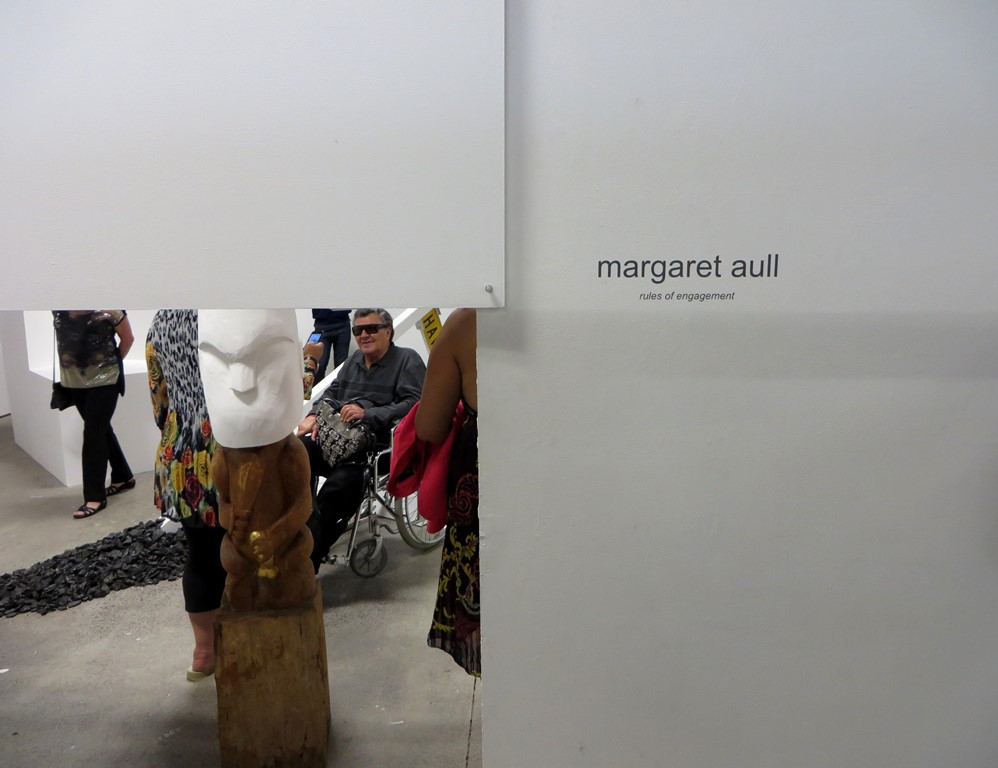
At the culmination of her postgraduate enquiry, this work maps Aull’s personal and intercultural journey of understanding the notion of sacredness, of safety and of self.

I’ve loved watching the developments of Margaret’s work and I’m excited to see what’s to come!

1 Comment

October has been a bit amazing

Since September I’ve been coordinating OTARAfest, a new annual event programme produced by Manukau Institute of Technology (MIT) Faculty of Creative Arts; it ran from 18 October – 2 November and the inaugural programme included 11 stand-alone events delivered in and around the Otara Town Centre.

With a focus on revitalising the Otara Town Centre and creating opportunities for artists and the wider community to meet, share and reflect on contemporary art, talent and creative energy emanating from the local environment, OTARAfest was a refreshing and hugely rewarding project to be part of.

The programme was officially launched at the opening of Fresh Out of School, an exhibition at Fresh Gallery Otara featuring six new graduates from the outgoing Bachelor of Visual Arts degree programme offered at MIT Faculty of Creative Arts. The opening was a celebration of achievement for the students involved; we wanted to emphasise their commitment and hard work, and their new beginnings as qualified visual artists. The Gallery was filled with family and friends, music was provided by DJ Al’Goodie, a well-respected local DJ and radio personality and slow-cooked pork sliders, raw fish and smoked salmon bilinis were served courtesy of Lissy’s Kitchen.

Desire2Inspire, a local arts collective performed at the OTARAfest launch. With all its members currently engaged in youth work and related training, the two skits they presented were informed by lived realities for young people in South Auckland; managing peer pressure, the influences of drugs, alcohol and suicide, and the healing potential of faith and fellowship. I was so moved by their performances, their involvement and interest in the OTARAfest programme; it brought the community back inside the walls / windows of Fresh Gallery Otara and served as a reminder of the consciousness a local community art gallery should reflect.

OTARAcube was a new exhibitions concept that unfortunately launched two weeks behind schedule, meaning a performance work due to take place in the first weekend of the programme was sadly cancelled. However, its better-late-than-never arrival enabled the launch of its inaugural exhibition featuring Tongan artist sisters, Vea and Emily Mafile’o. The opening of their multimedia installation coincided with a special gathering of the Tongan art collective, No’o Fakataha at Fresh Gallery Otara on Friday 1 November.

An initiative of MIT Faculty of Creative Arts with support from the Otara-Papatoetoe Local Board, the OTARAcube started life as a 20 foot shipping container; its design and customisation was undertaken by Nigel Burton (DVANZ). Now a permanent fixture in the Otara Town Centre, OTARAcube is located in the area between the Bus Depot and the taxi stand; site specific exhibitions and experimental art projects are planned to turnover on a roughly monthly basis.

OTARAfest provided a platform for a series of gathering and networking events, one of which heralded the beginning of the South Auckland Young Artists Network (SAYAN), a new movement based on the successful Youth Arts Committee at central Auckland community art centre, Artstation. SAYAN will meet fortnightly at Fresh Gallery Otara, contact Kirstin Whalen to go on the mailing list.

South Auckland Theatre Collective presented their first production, My Life, My Story, My South Auckland and got this sweet review, the wonderful P.O.T Productions delivered a beautiful re-worked and site-specific version of Pukepuke ‘O Tonga and OTARAwindow, a series of three outdoor window boxes on the exterior wall of Otara Family & Christian Health Centre, featured the work of Luisa Tora for the duration of OTARAfest.

I enjoyed so many facets of project managing this event programme, but one event in particular was an absolute career highlight. I had the privilege of working again with Tanu Gago, co-founder of FAF SWAG, a collective that advocates, promotes and endorses youth voices from South Auckland’s Pacific LGBTQI communities. Inspired by the American documentary film, Paris Is Burning, the first FAFSWAG Ball aimed to create a competitive platform centralising talent, performance prowess and safety in an accessibly priced, event experience unique to South Auckland.

The FAFSWAG Ball was affirming, electric, covered in glitter and tear-inducingly empowering!

As of 24 hours ago, I’ve also officially completed all the required outcomes for my Master of Arts Management degree at AUT University and I’m so relieved! I’m deeply thankful to my partner, my friends and family for helping me study and endure the financial hardship of committing to full-time postgraduate study, and especially to my mother, who has listened, advised and encouraged me to not give up, thanks Mum!

This weekend I’m showing two works in the annual King’s College Fine Art Sale and on Sunday I’ll be delivering a talk on Pacific art making and appreciation in South Auckland from 12.45pm, click here for more details.

Check out this track by Otara artist, Beelah – it is the soundtrack of Vea and Emily Mafile’o’s OTARAcube exhibition and was shot and recorded right here in Otara – love it!