Posts tagged ‘Ema Tavola’

http://www.youtube.com/watch?v=SN5nsjcQofo

Oceania Interrupted produced this video for a gathering on World Press Freedom Day, Saturday 3 May, in collaboration with South Auckland-based film maker, artist and activist, Tanu Gago.

As the fourth of 15 planned interventions to raise awareness for West Papua  in Aotearoa New Zealand, Action 4 took the form of a call for women to conduct interviews and discuss the issue of West Papua, visibility and freedom with people in their lives. The interviews are woven together with footage from previous Oceania Interrupted interventions or actions, along with imagery and footage that has inspired the collective.

I love being part of Oceania Interrupted; it is life-giving and deeply empowering. Massive thanks to the women who participated and to those who were interviewed, to Tanu Gago who laboured for many hours processing footage and editing, to all the women who have been involved and will be involved in future actions. To Fresh Gallery Otara for hosting our launch and gathering on World Press Freedom Day, to the Faculty of Creative Arts at Manukau Institute of Technology for supporting the project and to everyone who has contributed to this collective effort. We ALL share one love for West Papua and in small ways, hope to be contributing to broadening awareness, mobilising action and affecting change.

Oceania Interrupted: Empowering Collective Action
#FreeWestPapua

More information: www.OceaniaInterrupted.com

I made a series of collages for the #Tattoo4Tonga fundraising effort last month inspired by a visit to Auckland Museum. Associate Curator Pacific, Kolokesa Māhina-Tuai bought one the works in my Paper Breastplates Series and wrote this blog about the inspiration that stemmed from a quick visit to the Auckland Museum store room! Click here to read more…

Click to read more

Click to read more

I’ve made a series of paper collages to sell at #Tattoo4Tonga this weekend.

I was inspired after a visit to the Auckland Museum storeroom where I spied some exquisite Fijian breastplates kept in dark little drawers. Being so close to them without a glass cabinet between us, I felt attached and energised by them; I’ve been intrigued with Fijian breastplate design for a long time. Although I was able to photograph them, I was asked not to share the imagery. I loved encountering these beautiful objects and wanted to tell the world! As a social media creature, I found this proposition quite challenging… so, this series came about.

A paper entitled, Uncharted Histories of Ivory Carving Canoe Builders and Canoe Building Ivory Carvers in Western Polynesia, delivered by Steven Hooper at the Pacific Arts Association International Symposium in Vancouver last year gave me a deeper appreciation for the construction of Fijian breastplates. The Chiefs & Governors: Art and Power in Fiji exhibition catalogue published by the Museum of Archeology and Anthropology at the University of Cambridge (UK) has also inspired me. I long-term borrowed it from my parents on a recent trip to Suva, where I also made a quick visit to the Fiji Museum. I love observing the ways in which Fijian objects are kept, discussed, displayed and valued in these very different contexts.

Civavonovono - Breastplate, Fiji Museum

These paper breastplates were created thinking about where these beautiful objects live, in the Auckland War Memorial Museum in New Zealand, thousands of miles from where they came from. I was thinking about value and values, Fijian value and non-Fijian value. And imagining what repatriation would feel like, and in an ideal world, what the Fiji Museum could house and display if they had the resources and leadership of larger international museums.

The works I made use pages of magazines and journals about Auckland, Renaissance art, American muscle cars, contemporary art, oceans, Fijian arts and culture and the Bible.

This series, made specifically for the #Tattoo4Tonga event, measure approximately 250x250mm. They’ll be framed and sold for NZD100 each. All proceeds go towards Cyclone Ian relief in Ha’apai, Tonga.

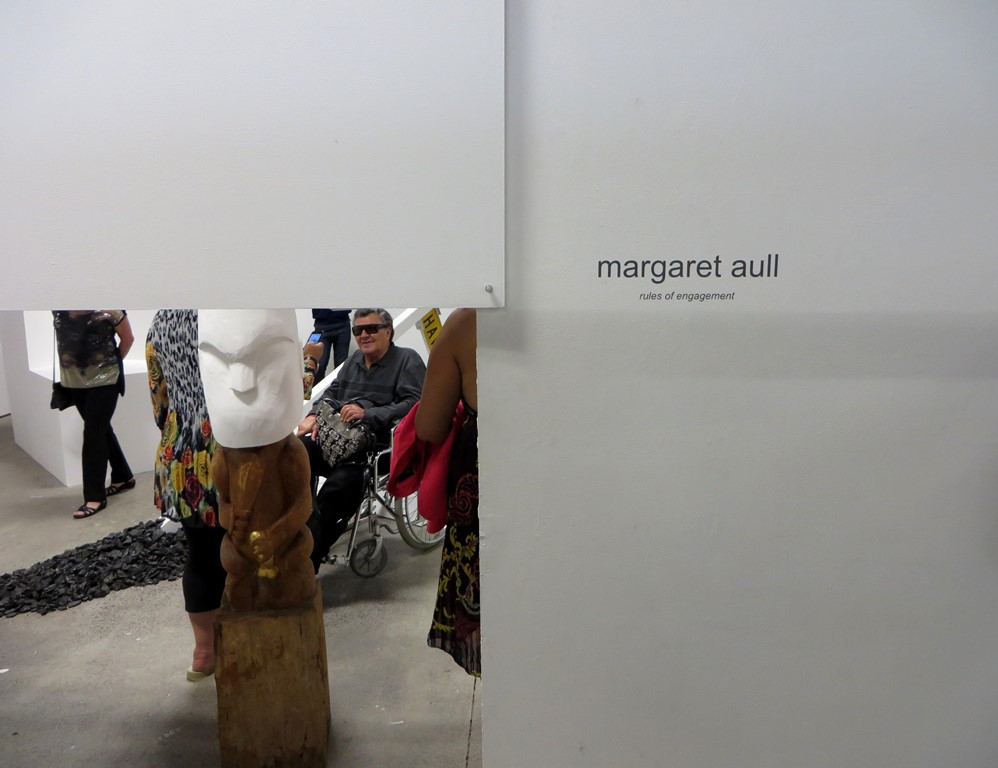
Install detail, "Rules of Engagement" (2014) by Margaret Aull

Waikato-based visual artist Margaret Aull (Te Rarawa, Tūwharetoa, Fiji) presented her Master of Fine Arts graduating work at Whitecliffe College of Arts & Design in central Auckland this week. I wrote a short comment for her exhibition catalogue…

Margaret Aull’s work over the past two years has traced the formation of a pan-cultural understanding of the notion of tapu, drawing from both Fijian and Māori frameworks. From the pictorial to the physical, her paintings have become sculpturally realised in installations that need to be physically negotiated. Throughout this process, the notion of tapu has been researched, discussed and experienced; the idea of sacredness considered in relation to objects and history, gender and power, time and space.

The interface of non-Fijian and non-Māori critical audiences has influenced and evolved her visual vocabulary; her work carries the sense of a deeply significant personal enquiry that is both protected and powerful. There are things that cannot be deconstructed for the purpose of intercultural understanding; there are senses of balance and belonging which cannot be translated into English. It is because of this cultural interface that I see Aull’s installation works as constructed environments for audiences to experience the role of observer.

Engaging with her work is to enact the manner in which protocol and presence is adjusted naturally to accommodate for unseen forces of socio-cultural mores. Such forces are embedded in epistemologies and ontologies, in land, sea and soil, in hearts, minds and memories.

Using imagery of her own body, Margaret confronts audiences with a further dimension of two-way self-reflection. Larger than life, her detached skin, eyes and teeth are loaded in political and emotional codes of race and beauty, sexuality and power.

At the culmination of her postgraduate enquiry, this work maps Aull’s personal and intercultural journey of understanding the notion of sacredness, of safety and of self.

I’ve loved watching the developments of Margaret’s work and I’m excited to see what’s to come!

1 Comment

Mereia, BLOOD+BONE series

Mereia was originally made for my 2009 solo exhibition, BLOOD+BONE

This work was always special to me as it’s a portrait of my older sister. This series of hi-viz vest portraits was made to represent the safety and protection of various women in my life during the period of time after I left my marriage. The series is about visibility and acknowledging those whose love and support was a guiding light through a period of intense darkness.

Mereia is currently being framed for the King’s College Fine Art Sale from 8-10 November. The annual event takes place at the school grounds on Golf Avenue, Ōtāhuhu, South Auckland. I’m part of the Ōtāhuhu Arts and Culture Sub-Committee of the Ōtāhuhu Steering Group; this year we’ve successfully advocated for the inclusion of a small group of local artists in this prestigious and high profile event. I’m exhibiting two works and also speaking on Sunday 10 November in the Speaker Series. Other artists representing Ōtāhuhu are Leilani Kake, Jeremy Leatinu’u and Molly Rangiwai McHale.

More information coming soon!

1 Comment

I only wrote 15 posts for the #31WriteNow blog challenge; it was hard and rewarding… but raw at times. August has been a month of travel, migraines, jet lag, art beef, heartwarming support, too many I-don’t-smoke cigrarettes, and some really exciting opportunities.

After an adrenalin-fuelled fundraising effort and a whirlwind trip to the other hemisphere, the latter half of August has been a relative return to normality. My mind has been boggling with ideas about creative ecologies after hearing a presentation by Auckland policy researcher, Elise Sterback, and I’m busily writing assignments about funding, project management and the creative capacity and potential of the South Auckland suburb of Ōtāhuhu.
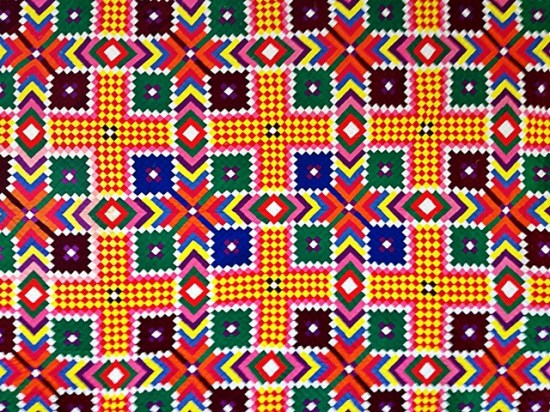
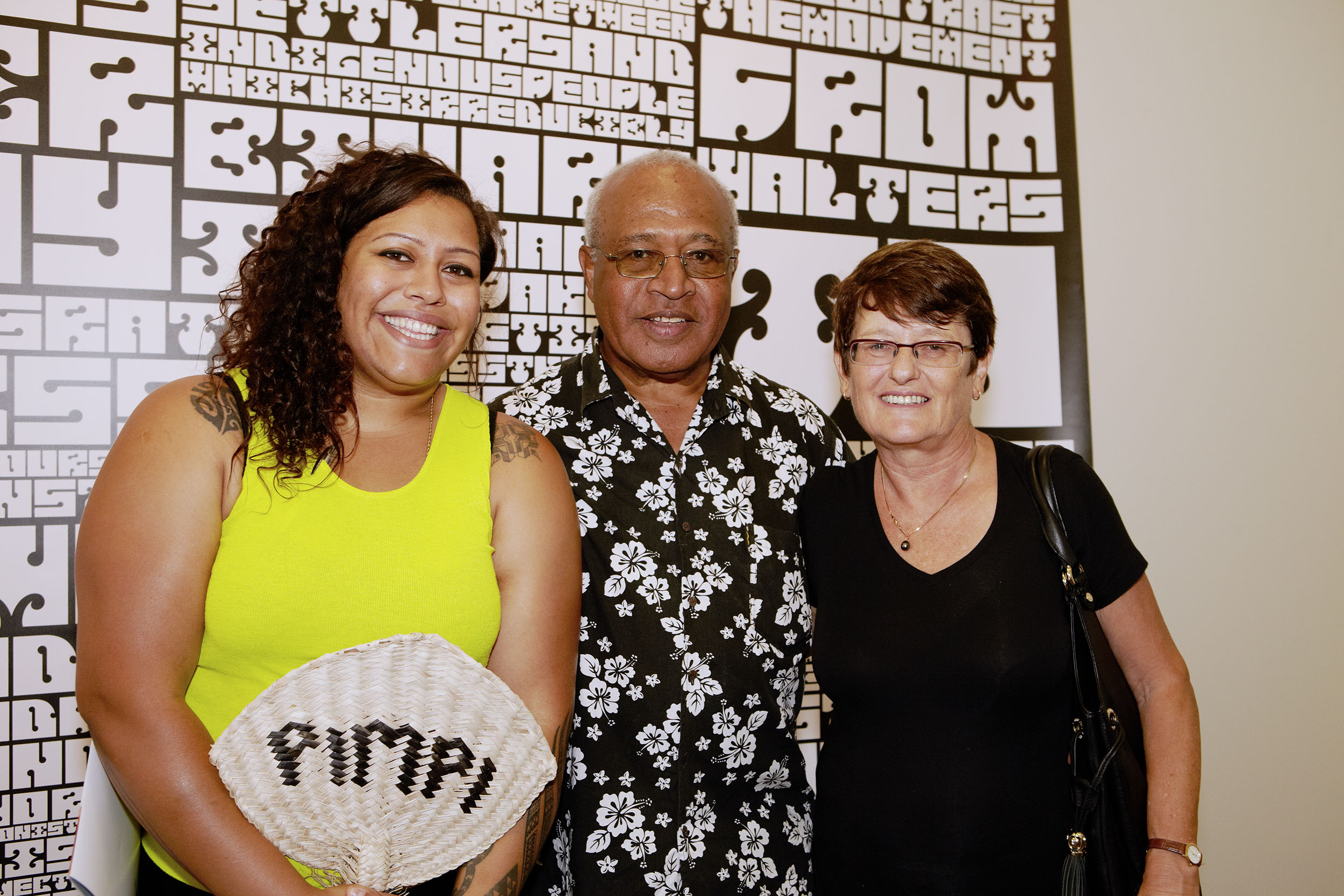
A new exhibition called Pirianga Toto – Blood Ties opened at Fresh Gallery Otara; it’s a welcome return to the grassroots programming the Gallery is known for. Curated by Leilani Kake, the exhibition draws on the work of customary and contemporary Cook Islands artists and features painting, experimental installation, video, Tivaevae and crochet. Follow Fresh Gallery Otara on Facebook for public programme announcements.

Part-Fijian playwright and director Toa Fraser’s 2006 film, No.2 aired on Maori Television in late August. I used to have problems with this film but it made me surprisingly emotional to watch it again seven years later. Originally, I felt short-changed that a film loosely based on a Fijian family starred more Māori and Samoan actors than Fijians. When I watched it this time around, I felt it was actually very much a New Zealand fruit salad story; part lost, part rooted, still slightly cringe-inducing, but somewhat comforting.

I’m back on board with some really exciting MIT Faculty of Creative Arts projects coming up in the next two months and can’t wait to teach the Pacific Art Histories: An Eccentric View paper again next year. I spoke in mid-August to postgraduate students at the University of Auckland and I’m planning a gutsy talk for the Kings College Fine Art Sale speaker series in early November.

August has been a fairly transformational month. I’ve been quietly weighing up the potential of staying in Auckland against a recurrent urge to relocate back to Suva, Fiji. Getting to the Pacific Arts Association 11th International Symposium in Vancouver was almost a year long project; closing the book on that has been a welcome relief. I gave up blogging every day around mid-August, but kept on working, hustling, writing and planning.

My partner’s father, Tu’i, has been dealing to my knots, stress and aches for the past few months with Tongan massage. I usually mentally psych myself up for what can feel like a hiding in slow motion; pressure points ache and burn, and when standing, my knees feel like jelly. But today Tu’i declared, somewhat surprised, that I was OK – no knots, no tightness… no pain.

The #31WriteNow blog challenge forced me to write, declare my position and stand by my words. With almost 3,500 hits in one month, the initiative was a successful means of generating awareness, traffic and discussion. Having worked in relative isolation for the past year, hyper-blogging for 15 days was more exposure than I had anticipated – but thank you for reading, liking and sharing and hello new followers and friends!

In 2006 I attended, Vaka Vuku: Navigating Knowledge, a Pacific Epistemologies Conference at the University of the South Pacific in Suva, Fiji. For the highly considered diversity of academic enquiry, the conference’s inherent rootedness in Pacific ways of seeing and thinking, and almost by default, the exceptional showcase of hosting and hospitality, Vaka Vuku: Navigating Knowledge has set the standard for inspiration, event delivery and thought leadership; it transformed my thinking.

It may be the jet lag, but there have been talks in the Pacific Arts Association International Symposium that have literally made my contact lenses fall off my dried up eyeballs. This is what I mean when I say, dryballz.

But, there have been two speakers who have activated my thinking about the Ocean.

Michael Nicoll Yahgulanaas delivered a keynote presentation on the second day of talks. His consciousness for environmental truth and damage made me reflective of my role and what I can do. His environmental parable, Flight of the Hummingbird, is a sweet reminder that every little bit counts. The story is animated here and the book is available on Amazon; it’s a beautiful thing.

Cook Islander Eruera Nia discussed the re-thinking of traditional Ocean boundaries to protect and honour that which sustains Island life. It was a moving tribute, within the context of this forum, to the source of life, people and culture in our region.

This week has been full of signs that have galvanised my thinking about returning to Fiji. In a more poetic way, I might say that the Ocean is whispering to me to return, but my homing call is an incessant alarm: it is time to come home.


We travelled by American school bus to the Musqueam Cultural Centre on the morning of August 7. I was excited to learn that the first day of the Pacific Arts Association International Symposium would take place in such a great space. With young people and artists milling around, located in the heart of the Musqueam Reservation and on the water’s edge, I loved the setting and felt excited to deliver my paper within that context.

I always appreciate the opportunity to speak last, and in this case, it was an opportunity to salvage some professionalism after my fellow panelists delivered poorly prepared and disorganised presentations, surprising given that both of them had secured grants to travel and participate in this conference. I have felt the weight of every ounce of investment from those who supported the #2girls1conference fundraising campaign; my paper was a small way to honour those who invested in Leilani and I, and the prestige of this forum.

I was grateful to have a full-house in attendance, and although it was far from an ideal space, the intimate environment enabled some good discussion. I love when Pacific people ask questions but so often those with privilege and agency dominate time and space. It seemed to surprise an Australian conference goer, who had addressed the panel with relatively self-serving commentary for the third time, when I declared that this forum, or rather, any academic forum about Pacific art, has little to no relevance for most Pacific artists making work at the grassroots. They are neither validated, or concerned with what is discussed here because there is a parallel world of criticality, aesthetics and significance that exists between Pacific art and Pacific audiences. I opened the door for what could be hours upon hours of debate and sparked small fires in the minds of those who approached me later to dissect and discover what I had meant.

My position and open declaration of my politics is not what it used to be when I worked as a public servant. I am in a different space, with different loyalties. I no longer represent institutional agendas and received no public grant money to enable my trip; the presumed hand that I was accused of biting with my closing remarks, is in fact not the hand that feeds me anymore.

Instead, my community, my family and my loving partner have been my foundation; as long as I’m making them proud, I’m OK, and after today – I’m more than OK.

7 Comments

Tepora Malo

Title: REAL TALK series
Date: 2013
Medium: Screenprint on 300gsm Archival Paper
Dimensions: 594x420mm [unframed]

Born in 1992 and raised in South Auckland, Tepora Malo is a Samoan visual artist studying at the Faculty of Creative Arts at Manukau Institute of Technology. Noted for her innovative mash-up design style combining Island florals with animal print and urban iconography, Malo collaborated with Leilani Kake and Ema Tavola to produce the REAL TALK T-shirt design for the #2girls1conference campaign.

After graduating with a Bachelor of Creative Arts, Malo plans to develop her print and design practice expanding into fashion and textiles.

Back to the #2girls1conference Art Auction Online Catalogue

Unsettled Earth Pylon City (2006) by Ema Tavola

Ema Tavola

Title: Unsettled Earth Pylon City
Date: 2006
Medium: Acrylic on Canvas
Dimensions: 865x1200mm

Artist Statement

Pylon gazing in Otara, after the rain.
Missing home.

Bio

Ema Tavola is a South Auckland-based visual artist, writer and curator of Fijian / New Zealand Pākehā ancestry. Having established her art practice at the Oceania Centre for Arts, Culture and Pacific Studies at the University of the South Pacific (Suva, Fiji), Tavola went on to complete a Bachelor of Visual Arts at the University of Auckland. She has exhibited in group shows in Auckland, Suva and Hawai’i and presented her first solo exhibition, BLOOD + BONE at the House of Taonga showroom in Auckland in 2009. In a curatorial capacity, Tavola has delivered numerous exhibitions at Fresh Gallery Otara, in addition to collaborative projects and exhibitions for ARTSPACE, Auckland Art Gallery, Mangere Arts Centre, Papakura Art Gallery and Te Tuhi Centre for the Arts.

Back to #2girls1conference Art Auction Online Auction